Social-Media Manipulation and Emotional Pressure: Signs and Safer Responses
GenZ Frontier Editorial | August 17, 2026
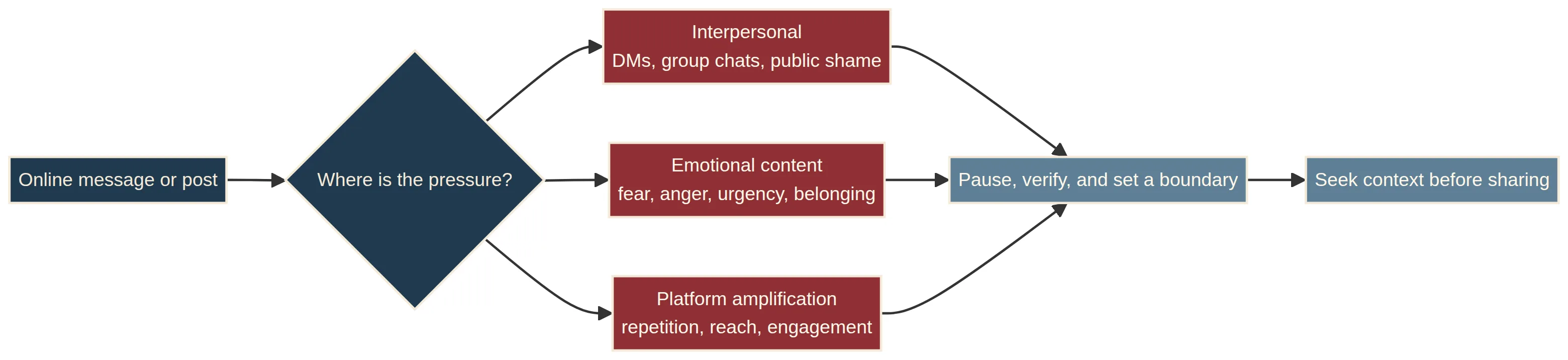
Social-media manipulation can occur at several layers. A person may pressure you through direct messages, group chats, public embarrassment, monitoring, or withdrawal. A post may use fear, anger, shame, urgency, or belonging to encourage an immediate reaction. Platforms may amplify content that attracts attention through repetition and engagement. These layers can overlap, but they should not be treated as identical.
Social media does not automatically control people, and every recommendation is not proof of manipulation. The useful question is what is observable: what claim is being made, what emotion is being triggered, what action is demanded, what information is missing, and whether you can pause without punishment.
Safety note: Do not confront an online contact if you fear retaliation, stalking, doxxing, or account compromise. Save evidence safely, review privacy settings from a trusted device, and seek support when needed.
The short answer
Possible social-media manipulation patterns include:
- a DM that creates false urgency and demands secrecy or immediate payment;
- a group that publicly shames members who ask questions;
- posts that use fear or outrage to pressure instant sharing;
- a contact who monitors likes, follows, locations, or response times as proof of loyalty; or
- repeated exposure to emotionally charged claims without reliable context.
For interpersonal language patterns, read Manipulative Communication Styles.
Three layers of online pressure
| Layer | Examples | Safer question |
|---|---|---|
| Interpersonal | DMs, group-chat pressure, public humiliation, monitoring, threats | Can I say no or pause safely? |
| Content | Fear, anger, shame, false urgency, conspiracy, selective evidence | What is the source and what information is missing? |
| Platform | Repetition, reach, engagement incentives, recommendation systems | Am I seeing a claim often because it is reliable or because it attracts attention? |
A platform effect does not prove that a specific person intended to manipulate you. Keep interpersonal accusations separate from broader questions about design and media systems.
Signs in DMs, comments, and group chats
False urgency and secrecy
“Act now,” “do not tell anyone,” and “you will lose everything if you wait” are pressure signals. Pause, verify through an independent channel, and do not send money, passwords, codes, or intimate material to satisfy urgency.
Public shame and loyalty tests
A person or group may demand that you prove loyalty by sharing private information, attacking another person, or accepting humiliation. You can leave a conversation without proving that you care.
Monitoring and digital control
Repeated demands for screenshots, location sharing, response-time explanations, or account access can become controlling. Consent to one feature does not create unlimited permission to monitor.
Emotional sequencing
A post may move quickly from fear to anger to moral condemnation and a demand for action. Strong emotion is not proof that a claim is false, but it is a reason to slow down before sharing or donating.
Repetition without independent support
Seeing the same claim many times can create familiarity. Check the original source, date, evidence, corrections, and independent reporting rather than treating repetition as confirmation.
For broader misinformation context, read Psychological Manipulation and Misinformation.
Safer responses
Pause before replying or sharing. Ask what the person wants, whether you have a real choice, and what would happen if you said no. Move important conversations away from public pressure only if doing so is safe; do not let a person use privacy to isolate you from support.
Verify claims through independent, credible sources. Look for the original document, date, author, evidence, corrections, and whether reputable sources disagree. Do not rely only on screenshots or cropped clips.
Review account security from a trusted device. Use strong unique passwords, multi-factor authentication, and privacy settings where appropriate. If someone may monitor your device, seek expert or advocate guidance before making changes that could reveal your plan.
Document threats, impersonation, harassment, or coercive messages safely. For broader guidance, read How to Document Gaslighting or Emotional Abuse Safely and How to Respond to Emotional Manipulation.
Frequently asked questions
What is social-media manipulation?
It is a broad term for using online communication, emotionally charged content, information control, or platform dynamics to influence beliefs or behavior in ways that reduce transparency or meaningful choice. The context and evidence matter.
Are algorithms manipulating me?
Recommendation systems can shape what people see, but the effect varies and does not prove that a platform controls a person’s decisions. Study the source, diversify information, and pause before acting on high-emotion content.
How do I know if a DM is manipulative?
Look for false urgency, secrecy, pressure for money or codes, threats, guilt, public-shame warnings, or punishment for not responding. Ask for time and independent verification.
Should I argue with misinformation online?
Not necessarily. Correcting a claim may help in some contexts, but public arguments can increase exposure or risk. Protect your time and safety, report harmful content when appropriate, and seek trusted sources.
Final takeaway
Social-media manipulation can involve a person, a post, a group, or a platform dynamic. Separate those layers and focus on what you can verify: the source, the emotional pressure, the requested action, and your ability to pause.
You do not owe an online contact immediate access, money, private information, or proof of loyalty. Slow down, verify, protect your accounts, and seek support when pressure becomes threatening or controlling.
References
Canonical URL: Open the canonical article page