The Silicon Delta: Meta’s Strategic Expansion and the Gen Z Digital Frontier in Bangladesh
নিজেশ্ব প্রতিবেদন | September 24, 2026
Introduction: The Geopolitics of Big Tech in South Asia
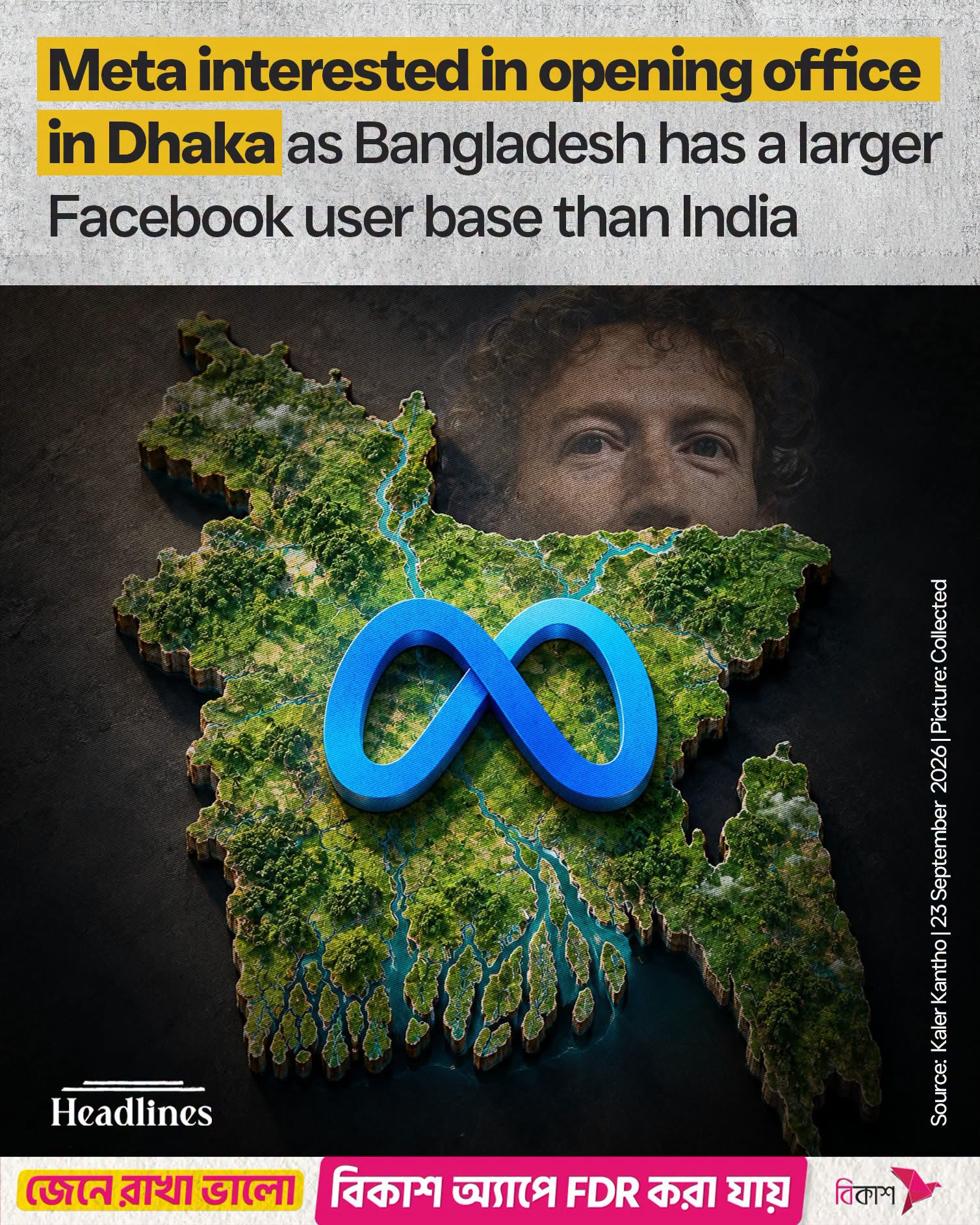
The global expansion of multinational technology conglomerates has increasingly shifted focus toward the Global South, where immense demographic dividends and rapidly digitizing populations present the next frontier for user growth and revenue generation. Within this paradigm, Bangladesh has emerged as a critical node in South Asia’s digital geography, driven largely by a technologically native Generation Z and a rapidly formalizing digital economy. Boasting a population of over 170 million and an estimated 46 million active Facebook users, the nation represents one of the largest single-platform consumer bases in the world, with Facebook holding a commanding 72.5% share of the domestic social media market. Recognizing this latent potential, Meta Platforms Inc. has initiated high-level diplomatic dialogues with the Government of Bangladesh to explore the establishment of a physical operational hub in the capital city of Dhaka.
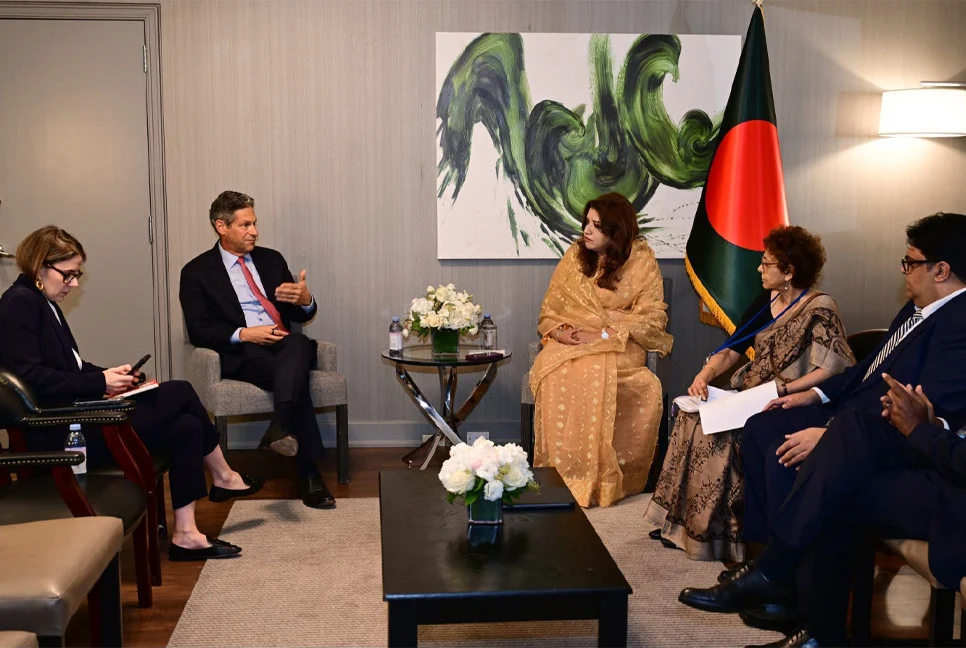
This development was formally disclosed during the 81st session of the United Nations General Assembly (UNGA) in New York in September 2026. Following highly productive discussions with Meta’s Chief Global Affairs Officer, Joel Kaplan, Bangladesh’s State Minister for Foreign Affairs, Shama Obaed, confirmed that the technology giant is reviewing the operational feasibility and strategic timelines for opening a Dhaka office. The implications of a localized Meta presence in Bangladesh extend far beyond corporate real estate. For years, the nation’s digital ecosystem has operated in a state of asymmetric dependency on Meta’s platforms—relying on Facebook, Instagram, and WhatsApp as foundational infrastructure for communication, commerce, and political discourse, yet lacking the formalized support, localized algorithmic tuning, and direct regulatory engagement that a physical office guarantees.
 This exhaustive analytical report investigates the multi-dimensional impact of Meta’s proposed expansion into Bangladesh. By mapping the contours of this digital frontier, the analysis evaluates the cascading effects on the nation’s booming "F-Commerce" sector, the burgeoning Gen Z creator economy, the macroeconomic integration of localized digital advertising, the highly complex challenges of moderating code-mixed linguistic data, and the overarching evolution of the nation's technology startup ecosystem.
The Diplomatic Dialogue: Aligning State Objectives with Corporate Strategy
The September 2026 bilateral discussions at the UNGA represent a critical juncture in the relationship between the Bangladeshi state and Silicon Valley. Historically, interactions between Dhaka and Meta have been characterized by remote compliance requests and ad-hoc policy interventions, often mediated through regional headquarters in Singapore or India. The proposal to establish a "focal point" in Dhaka signals a mutual recognition of the market's maturity and the necessity for real-time, localized collaboration.
The diplomatic engagement in New York was extensive, reflecting the high prioritization of digital sovereignty and economic expansion by the Bangladeshi administration. While Prime Minister Tarique Rahman was originally scheduled to attend the Meta meeting, severe time constraints associated with a dense UNGA schedule—which included bilateral meetings with Turkish President Recep Tayyip Erdoğan, Haitian Prime Minister Alix Didier Fils-Aimé, Maldives Vice-President Hussain Mohamed Latheef, and Bhutanese Prime Minister Dasho Tshering Tobgay, as well as engagements with the World Bank Group and the UN High Commissioner for Human Rights—necessitated a delegation reshuffle. Consequently, the dialogue with Meta’s Joel Kaplan was led by State Minister Shama Obaed, accompanied by Prime Minister’s Adviser Rehan Asif Asad, Bangladesh’s Permanent Representative to the UN Irene Khan, and Deputy Permanent Representative A.K.M. Waheeduzzaman.
For Meta, the strategic imperative to anchor itself in Dhaka is driven by the sheer volume of its user base. Bangladesh is among the top ten countries globally for Facebook usage, surpassing the user numbers of several major European and Asian economies, and registering a larger domestic user base than India on a per-capita saturation basis. However, navigating the geopolitical and regulatory landscape of South Asia requires localized diplomacy. The recent political transitions in Bangladesh—marked by the historic July 2024 uprising and the subsequent establishment of a reformed administrative order—have introduced a policy environment that prioritizes transparent economic growth, anti-corruption measures, and the modernization of digital infrastructure.
From the perspective of the Bangladeshi state, securing a Meta office serves multiple strategic objectives. Primarily, it acts as a catalyst for the formalization of the digital economy. The government has heavily prioritized technology and e-commerce in its national budgets, seeking to transform informal online trading into taxable, regulated, and scalable enterprise. Furthermore, a local Meta office facilitates a more agile response mechanism for national security and social stability concerns, particularly regarding the rapid spread of digital harassment, misinformation, and political polarization. The ability to summon corporate representatives locally, rather than relying on international diplomatic channels, grants the state greater sovereignty over its digital borders while simultaneously offering Meta a direct line to negotiate the nuances of the proposed Cyber Security Act (CSA).
| Diplomatic Engagement Profile (UNGA 81st Session, New York) | Details |
|---|---|
| Meta Representative | Joel Kaplan (Chief Global Affairs Officer) |
| Bangladesh Delegation Lead | Shama Obaed (State Minister for Foreign Affairs) |
| Key Delegation Members | Rehan Asif Asad, Irene Khan, A.K.M. Waheeduzzaman |
| Primary Discussion Vectors | E-commerce expansion, Cyber Security Act, digital harassment reduction, SME support |
| Parallel Bilateral Meetings (PM) | Turkey, Haiti, Maldives, Bhutan, World Bank, UNHCR |
Table 1: Structural Overview of the Bangladesh-Meta Diplomatic Engagements
The F-Commerce Phenomenon: From Shadow Economy to Digital Mainstream
The most immediate economic beneficiary of Meta’s deepened integration into Bangladesh is the localized iteration of social commerce, universally referred to as "F-Commerce" (Facebook Commerce). Unlike traditional e-commerce platforms that require significant upfront capital for website development, hosting, and dedicated logistical infrastructure, F-Commerce leverages the existing user base and communicative architecture of Facebook to facilitate peer-to-peer and business-to-consumer trade.
Scale, Demographic Impact, and the Gen Z Engine
The scale of F-Commerce in Bangladesh is structurally transformative. Industry data indicates the existence of over 300,000 active Facebook-based commercial pages, generating an estimated market size of approximately Tk 1,000 crore. This ecosystem operates as a highly decentralized digital mall, where consumers—heavily skewed toward the Gen Z demographic—browse algorithmic feeds, interact via Messenger or WhatsApp, and finalize transactions through cash-on-delivery (COD) or mobile financial services (MFS) like bKash and Nagad.
Crucially, F-Commerce has functioned as an unprecedented engine for female economic empowerment and youth entrepreneurship. Research indicates that women own between 50% and 70% of all Facebook-based businesses launched in the country, a trend that accelerated aggressively during the COVID-19 pandemic lockdowns and has sustained its momentum into 2026. For well-educated women facing barriers to traditional corporate employment—often due to systemic socio-cultural constraints, domestic responsibilities, or urban gridlock—F-Commerce provides a low-barrier entry point into direct-to-consumer retail. A comprehensive study conducted by the BRAC Institute of Governance and Development (BIGD) revealed that an overwhelming 99.18% of female F-commerce entrepreneurs surveyed held a bachelor’s degree or higher, demonstrating that the sector is driven by highly educated demographics seeking alternative avenues for financial independence. Furthermore, 57% of these women ran their F-commerce site as their sole occupation, firmly establishing the sector as a primary macroeconomic driver rather than a supplementary side-hustle.
| F-Commerce Ecosystem Metric | Estimated Value / Percentage |
|---|---|
| Total F-Commerce Pages | 300,000+ |
| Estimated Market Size | Tk 1,000 Crore |
| Female Ownership Share | 50% - 70% |
| Entrepreneurs with Bachelor's Degree (Female) | 99.18% |
| F-Commerce as Sole Occupation (Female) | 57% |
| Primary Transaction Mechanisms | Cash on Delivery (COD), bKash, Nagad |
Table 2: Key Demographic and Economic Indicators of the F-Commerce Ecosystem in Bangladesh
Structural Vulnerabilities, Tax Evasion, and Environmental Externalities
Despite its rapid expansion, the F-Commerce sector is fraught with structural vulnerabilities that a localized Meta presence could help mitigate. The ecosystem largely operates within the informal shadow economy. Out of the 300,000 operational pages, a staggering majority are entirely unregistered; historically, only a tiny fraction (roughly 100 pages) have been formally associated with the E-Commerce Association of Bangladesh (e-CAB) or hold formal trade licenses. This lack of formalization results in significant value-added tax (VAT) revenue losses for the state, as businesses generating between Tk 10,000 to Tk 100,000 monthly operate without physical storefronts, rendering tax collection nearly impossible.
Furthermore, the absence of robust, localized identity verification mechanisms has led to a proliferation of consumer fraud. Data indicates that the percentage of customers experiencing scams or receiving counterfeit products via F-Commerce rose from 7% in 2018 to over 11% by 2020, severely damaging consumer trust in digital ecosystems. For legitimate merchants, operational challenges are equally daunting, including handling returns, maintaining customer loyalty in a hyper-competitive, algorithmically driven feed, and navigating arbitrary page suspensions without dedicated local support channels.
The explosion of F-commerce has also generated secondary environmental externalities that require urgent regulatory attention. The reliance on hyper-fragmented parcel delivery services (such as Pathao and eCourier) has driven an exponential increase in single-use plastic packaging. The rise in plastic consumption in Bangladesh's urban areas is stark; per capita consumption tripled from around 3 kilograms in 2005 to 9 kilograms in 2020, with the capital city of Dhaka faring worse at approximately 22.5 kilograms annually. The rapid fulfillment models demanded by F-commerce directly contribute to this waste generation, highlighting the need for Meta and local authorities to integrate sustainability frameworks into digital commerce operations.
State Minister Shama Obaed’s dialogue with Joel Kaplan explicitly addressed Meta’s role in expanding and supporting these SMEs. A physical Meta office in Dhaka could facilitate the rollout of verified merchant programs, localized dispute resolution centers, and integrated payment gateways that automatically calculate and withhold taxes. By transitioning these 300,000 micro-enterprises into the formal economy, Meta and the Bangladeshi government can co-create a regulatory sandbox that protects consumers, enhances tax collection, and addresses environmental logistics, all while preserving the low barriers to entry that have made F-Commerce a lifeline for the Gen Z workforce.
Democratizing Digital Capital: Financial Infrastructure and Localized Ad Spend
The expansion of F-Commerce and the broader digital economy has historically been bottlenecked by Bangladesh's stringent foreign exchange regulations. Until recently, local SMEs, individual Gen Z entrepreneurs, and content creators faced significant financial friction when attempting to purchase advertising space on Meta platforms. The traditional mechanism required users to possess a dual-currency credit card, which necessitated a formal passport endorsement and was subject to strict annual foreign currency quotas. For an ecosystem comprised largely of unregistered micro-entrepreneurs, acquiring a dual-currency corporate credit card was a nearly insurmountable bureaucratic barrier.
The Integration of Localized Payment Gateways
The regulatory landscape has recently shifted to accommodate the realities of the digital economy. Recognizing the friction in the market, the Bangladesh Bank issued critical circulars allowing businesses to utilize mobile financial services (MFS) and localized banking channels to settle cross-border digital advertisement payments. Consequently, Meta has integrated local payment options, prominently featuring dominant MFS providers like bKash, allowing Bangladeshi merchants to fund their Meta Ad accounts directly in Bangladeshi Taka (BDT).
This localized financial integration represents a paradigm shift for the Gen Z digital frontier. The cost stacking of digital advertising in Bangladesh reveals that an average SME spends between 1,500 to 7,500 BDT per campaign to generate measurable results, while larger direct-to-consumer (D2C) brands deploy upwards of 25,000 BDT monthly. By removing the reliance on scarce US dollars and bridging the gap between Meta's billing infrastructure and local mobile wallets, the digital advertising market has been fundamentally democratized. Micro-entrepreneurs can now scale their reach with hyper-targeted ad campaigns without running afoul of foreign exchange controls or relying on illicit grey-market ad agencies.
Capacity Building and the Small Business Growth Academy
The financial democratization is being paired with aggressive capacity-building initiatives. The government, operating under the guidance of ICT Adviser to the Prime Minister Rehan Asif Asad, has explicitly stated a policy of non-intervention regarding the expansion of small businesses, choosing instead to foster an environment where local entrepreneurs can scale through AI-driven economies. Aligning with this vision, Meta has partnered with local strategic advisory firms, such as LightCastle Partners, to deploy the Small Business Growth Academy.
This initiative aims to train over 1,000 small and medium-sized businesses in Bangladesh, equipping them with digital marketing competencies, algorithmic optimization techniques, and the ability to deploy Meta's AI-enabled tools for market competitiveness. A formalized Meta office in Dhaka would serve to permanently anchor and accelerate these capacity-building programs, transforming digital literacy from a theoretical concept into an actionable, measurable driver of macroeconomic growth.
The Gen Z Creator Economy: Monetization and Cultural Production
As the infrastructure for digital commerce matures, a parallel ecosystem is rapidly scaling across Bangladesh: the creator economy. Driven almost entirely by Generation Z and young millennials, content creation is transitioning from a leisure activity into a highly lucrative, formalized profession. Meta’s strategic emphasis on short-form video, designed to aggressively compete with platforms like TikTok and YouTube (which holds a 22.92% market share in Bangladesh), has resulted in the global rollout of Facebook Reels, bringing with it robust monetization frameworks.
Reels Play Bonus and Direct Monetization Architectures
Meta’s $1 billion global creator investment fund includes the "Reels Play" bonus program, an initiative that previously offered eligible creators up to $35,000 a month based on the viewership metrics of their short-form content. In Bangladesh, the introduction of direct monetization pathways—including in-stream ads, overlay ads on Reels, and the Facebook Stars virtual tipping mechanism—has completely altered the socio-economic calculus for the nation’s youth.
Historically, Bangladeshi content creators were restricted in their ability to earn direct platform revenue from Facebook, often relying solely on third-party brand sponsorships or affiliate marketing. The current framework allows any user to transition their personal profile into "Professional Mode," thereby unlocking backend performance dashboards and monetization eligibility without the prerequisite of establishing a dedicated public page. Revenue generated through these streams can now be deposited directly into any bank account approved by the Bangladesh Bank, bypassing complex international wire transfers and streamlining the payout process for rural and urban creators alike.
The second-order effects of this monetization pipeline are profound. In a developing economy where traditional white-collar employment opportunities cannot keep pace with the estimated two million youths entering the workforce annually, the creator economy functions as a decentralized pressure valve for youth unemployment. Furthermore, the financial incentivization of content creation has led to an explosion of hyper-localized cultural production. From rural agricultural tutorials and regional culinary showcases to urban sketch comedy and political commentary, the financial viability of Reels has spurred a renaissance in Bengali digital media.
However, this rapid proliferation of user-generated content introduces severe challenges in algorithmic content moderation—a structural vulnerability that heavily dictates the necessity of Meta’s localized operational presence.
The Algorithmic Frontier: Code-Mixing, Banglish, and the Moderation Crisis
The most critical technical hurdle facing Meta in Bangladesh is not infrastructural, but linguistic. As digital penetration deepens across both urban centers and rural peripheries, the volume of user-generated content has overwhelmed existing human moderation architectures. Meta relies heavily on Artificial Intelligence and Large Language Models (LLMs) to automatically detect and remove policy-violating content, such as hate speech, adult imagery, self-harm promotion, and material inciting communal violence. While these models are highly effective in resource-rich languages like English, they face catastrophic failure rates when processing the linguistic complexities of South Asian digital discourse.
The Morphological Complexity of Code-Mixing
The primary language of the Bangladeshi internet is not formal Bengali script, nor is it English. It is a highly fluid, code-mixed hybrid colloquially known as "Banglish"—Bengali language typed out using the Roman alphabet, frequently interspersed with English vocabulary, localized slang, and inconsistent phonetic transliterations.
Existing sentiment analysis and toxicity detection models struggle profoundly with Banglish. Because the transliteration is phonetic and highly informal, a single Bengali word can be spelled in dozens of different variations (e.g., "bhalo", "valo", "vhalo" for "good"). When this morphological instability is combined with intra-sentential language switching (changing languages mid-sentence) and implicit cultural context, standard algorithms frequently misclassify sarcastic or humorous content as literal toxicity, or worse, fail entirely to identify severe regional hate speech and political incitement.
Localized AI Datasets and Cultural Nuance
Academic and technical research within Bangladesh is urgently attempting to bridge this algorithmic gap. Recent computational linguistics studies have produced specialized, multimodal datasets designed to train LLMs on the realities of the local digital ecosystem, highlighting the failure of "one-size-fits-all" moderation policies that ignore cultural variability:
- MixSarc: A dataset containing 9,087 manually annotated sentences designed specifically to identify implicit meaning, sarcasm, and code-mixed vulgarity in Banglish and Bengali-English text. It establishes benchmark results using supervised transformer models to navigate the intentional ambiguity of Gen Z internet slang.
- UNBER (Unsafe Bengali Reels): A novel multimodal dataset consisting of 1,111 codemixed Facebook Reels categorized into Safe, Adult, Harmful, and Suicidal classifications. This dataset explicitly addresses the cultural nuances of short-form video, noting that visual content deemed appropriate in Western contexts may severely violate local cultural standards, and vice versa.
- Banglish Toxicity Datasets: Comprehensive collections comprising thousands of multi-labeled comments (e.g., 10,234 Banglish social media comments) across categories like religious hostility, political chaos, threat-based hate speech, and sexual vulgarity. These datasets underscore the urgent need for models that can interpret regional political polarization and counter-speech in real-time.
- BnSentMix: A sentiment analysis dataset containing 20,000 samples of code-mixed Bengali-English sourced from e-commerce platforms and social media, providing robust coverage of both informal and formal language styles.
| Dataset Nomenclature | Data Modality | Sample Volume | Primary NLP Objective / Classification Focus |
|---|---|---|---|
| MixSarc | Text (Code-mixed) | 9,087 sentences | Implicit meaning, Sarcasm, Vulgarity in Banglish |
| UNBER | Multimodal (Video/Audio) | 1,111 Reels | Culturally aware safety classification (Adult, Harmful) |
| BnSentMix | Text (Code-mixed) | 20,000 samples | Foundational sentiment analysis (Positive, Negative, Mixed) |
| Banglish Toxicity | Text (Roman script) | 10,234 comments | Multi-labeled toxicity (Political chaos, Religious hostility) |
| Political Discourse | Text (Contextual pairs) | 10,021 pairs | Dialogic structures, Counter-speech identification |
Table 3: Emerging Code-Mixed and Multimodal Datasets for NLP Training in Bangladesh
A physical Meta office in Dhaka would serve as a critical nexus for solving this moderation crisis. By hiring localized teams of annotators, computational linguists, and cultural anthropologists, Meta can directly integrate regional datasets into its global AI training pipelines. Without a deep, culturally aware moderation infrastructure, Meta risks allowing its platforms to be weaponized for communal violence or severe digital harassment—issues that were explicitly highlighted as a primary concern by State Minister Shama Obaed during the UNGA discussions in New York.
Surveillance Capitalism and Digital Sovereignty: Navigating the Regulatory Web
The intersection of platform governance and state sovereignty is arguably the most sensitive dimension of Meta's potential expansion into Dhaka. The Government of Bangladesh has a vested interest in controlling the flow of information across social media to maintain public order and state security, while Meta is bound by internal policies and international human rights standards regarding freedom of expression and user privacy.
Historical Data Requests and the Impact of Regime Shifts
An exhaustive analysis of Meta’s bi-annual transparency reports illustrates a sharply rising historical trend in government requests for user data. In 2013, the Bangladesh government made a single data request; by the first half of 2020, this figure had surged to 241. The escalation continued aggressively into the modern era, reflecting a growing state apparatus focused on digital surveillance.
The data from 2024 offers profound insights into the geopolitics of state surveillance and the impact of the July 2024 uprising. In total, the government made requests for information on 3,771 user accounts throughout 2024. However, Meta's transparency report reveals a distinct statistical bifurcation correlating with the political regime change.
During the first half of 2024, under the administration of the Awami League, the government submitted 1,501 requests seeking information on 2,285 accounts, achieving a compliance rate of 68.4% from Meta. Concurrently, Meta restricted access to nearly 2,940 pieces of content based on complaints primarily originating from the Bangladesh Telecommunication Regulatory Commission (BTRC). Following the July 2024 uprising and the subsequent transition of power, the second half of the year witnessed a marked decline in state intervention. Requests dropped to 926 (seeking data on 1,486 accounts), with Meta's compliance rate falling slightly to 64%. Content restrictions also fell drastically to 1,280 items.
Civil society experts and digital rights advocates, such as Miraj Ahmed Chowdhury of Digitally Right, argue that this statistical contraction reflects a deliberate shift away from politically motivated content control and the weaponization of "legal requests" used historically to suppress dissent. For comparison, the government requested Google to remove 5,827 pieces of content during the same year, with Google taking no action on a significant portion due to insufficient information or policy conflicts.
| 2024 Meta Transparency Data (Bangladesh) | First Half (H1) 2024 | Second Half (H2) 2024 | Total (2024) |
|---|---|---|---|
| Total Data Requests | 1,501 | 926 | 2,427 |
| User Accounts Targeted | 2,285 | 1,486 | 3,771 |
| Meta Compliance Rate | 68.4% | 64.0% | N/A |
| Pieces of Content Restricted | ~2,940 | 1,280 | 4,220 |
Table 4: Meta Transparency Report Metrics for Bangladesh (Pre- and Post-July 2024 Uprising)
The Cyber Security Act (CSA) and the Risks of "Hostage Capitalism"
The legal framework underpinning these data requests—primarily the controversial Cyber Security Act (CSA) of 2023—was a central, highly scrutinized topic of discussion between Meta’s Joel Kaplan and the Bangladeshi delegation. The BTRC frequently cited violations of the CSA to flag content related to controlled substances, religious sentiments, and political dissent. While the new administration has signaled a commitment to reviewing and reforming draconian elements of digital legislation, the fundamental tension remains: how will a localized Meta office handle coercive legal demands from state intelligence or regulatory bodies?
Meta has continually asserted that it scrutinizes every government request for legal validity and consistency with internationally recognized human rights standards, pushing back against overly broad, vague, or deficient orders. However, operating a physical office with local employees introduces the inherent risk of "hostage capitalism," where corporate executives or local staff can be subjected to legal intimidation, harassment, or arrest if the company refuses to comply with state censorship demands. X (formerly Twitter) recently expanded its transparency tools to show exactly which local laws trigger post visibility restrictions, highlighting the growing global pressure on platforms to comply with localized speech regulations. The establishment of the Dhaka office will likely be contingent upon formalized legal guarantees regarding intermediary liability and the protection of Meta’s local workforce from punitive state action over platform content.
The Macro Startup Ecosystem: From Early Bets to Meta's Anchor
Beyond e-commerce, content moderation, and state surveillance, Meta’s physical presence has the potential to fundamentally catalyze Bangladesh’s broader technology startup ecosystem. Currently, the ecosystem comprises approximately 682 recognized startups, representing a cumulative valuation of nearly $4.58 billion, and ranking 77th globally in the Global Startup Ecosystem Index (maintaining the 4th position in South Asia behind India, Pakistan, and Sri Lanka).
Analyzing the "Missing Middle" of Venture Capital
A comprehensive analysis of the investment landscape reveals a maturing but highly polarized funding environment. Between 2010 and 2025, Bangladeshi startups successfully raised roughly $1 billion across 450+ deals. However, capital distribution is acutely concentrated, suggesting a systemic bottleneck in ecosystem progression.
Data indicates that approximately 57% of all venture capital deployed has flowed into late-stage Series B rounds, monopolized by a few elite firms in sectors like FinTech, EdTech, and Logistics (e.g., bKash, Pathao, Shikho). By contrast, Series A rounds absorbed roughly 15% of capital, while seed-stage funding accounted for only 12% of total capital, despite representing the vast majority of deal volume.
This dynamic creates a "missing middle"—a developmental chasm where early-stage experimentation thrives, but progressing from Seed to Series A/B is exceedingly difficult due to a lack of institutional growth capital, weak corporate acumen among young founders, and limited access to global mentorship networks. The ecosystem relies heavily on concentrated investments; for example, in the education sector, two edtech firms alone accounted for 86% of all sectoral investments.
| Funding Stage | Share of Total VC Capital Deployed (2010-2025) | Ecosystem Function |
|---|---|---|
| Seed Stage | ~12% | Early experimentation, high volume of deals, high failure rate |
| Series A | ~15% | The "Missing Middle", severe capital bottleneck |
| Series B & Beyond | ~57% | Scale-stage allocation, concentrated in elite legacy startups |
Table 5: Capital Concentration and the "Missing Middle" in the Bangladesh Startup Ecosystem
Policy Innovations and Meta’s Role as an Ecosystem Anchor
To combat these structural constraints, the Bangladesh Bank recently introduced a transformative startup financing policy, creating a Tk 500 crore fund that permits banks to make direct equity investments in startups. This policy caps interest rates at 4%, increases loan limits to BDT 8 crore, reduces the founder age restriction to 21 (directly targeting the Gen Z demographic), and mandates that at least 10% of financing be allocated to women entrepreneurs.
While domestic policy provides the foundation, a Meta office in Dhaka would serve as a powerful gravitational anchor for the ecosystem, providing the international validation necessary to elevate Dhaka from a regional player to a globally competitive technology hub. Global tech giants provide critical infrastructure for emerging startup scenes through three primary mechanisms:
- The Talent Pipeline: A local Meta engineering and operations hub trains a cohort of high-level executives, product managers, and software engineers. These individuals eventually cycle out of the corporate structure to found or scale local startups, injecting Silicon Valley operational discipline and product scaling methodologies into the local market.
- API and Platform Integration: Startups heavily reliant on Meta’s infrastructure (such as social commerce aggregators, digital marketing SaaS, and customer relationship AI platforms) benefit immensely from direct, localized technical support, earlier access to API rollouts, and partnership integrations.
- Foreign Direct Investment (FDI) Signaling: The physical presence of one of the world's most valuable technology conglomerates acts as a profound signal of market viability and geopolitical stability to global venture capital firms. If Meta views Dhaka as a secure, high-growth environment worthy of a physical footprint, global institutional investors are significantly more likely to deploy capital into local Series A and Series B rounds, effectively bridging the "missing middle" funding gap.
Conclusion
The potential establishment of a Meta office in Dhaka represents a watershed moment in the economic and digital evolution of Bangladesh. It signifies the definitive transition of a massive, informal consumer base into a recognized, sovereign participant in the global digital economy. For the millions of Gen Z creators and F-commerce micro-entrepreneurs operating within the Silicon Delta, localized financial integration, transparent ad-spend mechanics, and structured capacity building will drive unprecedented avenues for wealth generation and financial independence, particularly for marginalized demographics and highly educated women.
Concurrently, the localization of Meta's operations forces a long-overdue reckoning with the technological and linguistic complexities of the Global South. By directly confronting the morphological challenges of the "Banglish" code-mixed dialect and investing in culturally nuanced, multimodal AI moderation datasets like UNBER and MixSarc, Meta can pioneer algorithmic safety frameworks that protect users without silencing legitimate cultural expression or political counter-speech.
Ultimately, the success of Meta's expansion hinges on the delicate geopolitical balancing act between the multinational corporation and the host state. If the new Bangladeshi administration can guarantee a transparent, rights-respecting regulatory environment—reforming the Cyber Security Act to protect digital freedoms, ensuring corporate accountability, and safeguarding employees from state coercion—a Meta headquarters in Dhaka will not merely serve as a corporate outpost. It will become the foundational pillar upon which the future of South Asia's Gen Z digital frontier is constructed, catalyzing the startup ecosystem and redefining the parameters of digital sovereignty in the 21st century.