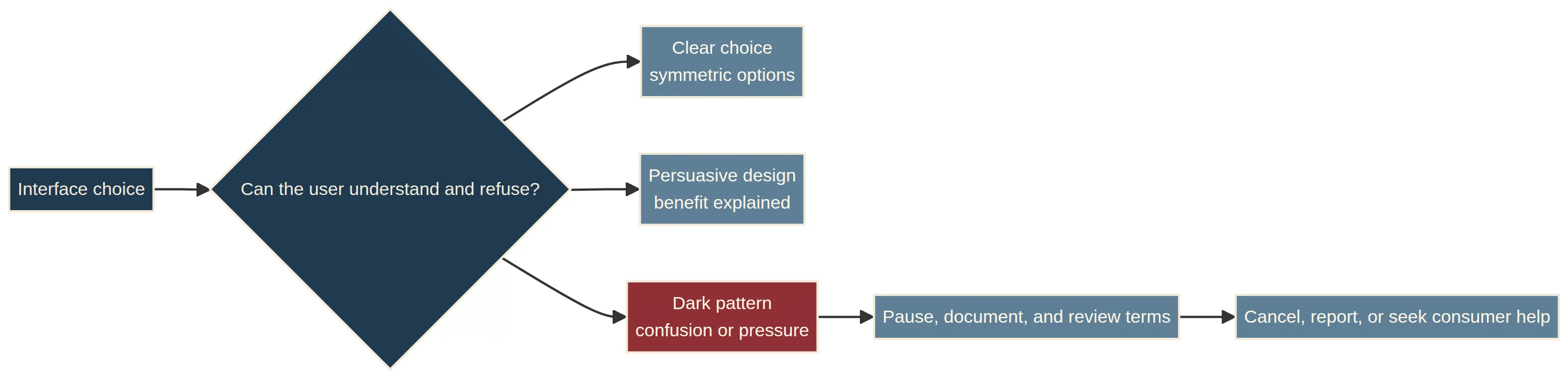
What Do Manipulators Say? Common Phrases and What They May Signal
GenZ Frontier Editorial | August 15, 2026
Certain phrases can leave you feeling guilty, pressured, confused, or afraid to say no. You may hear them from a partner, family member, friend, coworker, or another person with influence in your life. But a phrase by itself does not prove that someone is manipulating you.
The same words can have different meanings depending on the relationship, tone, history, power balance, and what happens next. “I am disappointed” can be an honest expression of emotion. “If you loved me, you would do this” may be a guilt-based demand when it is repeated to override a reasonable boundary. Context is not a minor detail; it is what separates ordinary emotional communication from a possible pattern of control.
This guide examines common phrase patterns and what they may signal when paired with repetition, deception, isolation, threats, humiliation, or punishment for refusal. It is written for recognition and safety, not for diagnosing another person or teaching anyone how to control someone else.
Safety note: If a phrase is accompanied by threats, stalking, surveillance, financial control, property damage, or physical danger, prioritize safety and confidential support. A clever response or confrontation is not guaranteed to make the situation safer.
The Short Answer
Phrases are more concerning when they repeatedly do one or more of the following:
- turn a reasonable boundary into a moral failure;
- make you responsible for another person’s emotions or choices;
- threaten punishment, abandonment, exposure, or harm;
- deny or distort events so that you doubt your memory;
- isolate you from people who could offer perspective;
- use affection, money, status, or access as a reward for compliance; or
- shift blame so the original behavior can never be discussed.
A careful interpretation asks four questions:
- What is the person asking me to do?
- What information or alternatives are being withheld?
- Can I say no without disproportionate punishment or danger?
- Does the person respect a boundary after I explain it?
Why Context Matters More Than a Phrase List
Popular articles often promise that certain words can reveal a “secret manipulator.” That framing is too certain. People say awkward, defensive, emotional, or hurtful things for many reasons. A phrase can be manipulative in one context and ordinary in another.
For example, “You never listen to me” might be an exaggerated complaint during a stressful argument. It might also be part of a repeated campaign to make you defend yourself instead of discussing the other person’s behavior. “I need space” can be a healthy request, or it can describe silent treatment when it is used to punish you until you comply.
The most useful evidence is usually the pattern:
| Question | Why it matters |
|---|---|
| Repetition | A repeated phrase or tactic can reveal a stable pressure pattern more clearly than one event |
| Timing | The phrase may appear immediately after you set a boundary or ask a question |
| Power | Money, housing, employment, caregiving, status, or dependency can change the risk |
| Transparency | Important facts may be hidden, distorted, or selectively presented |
| Refusal | The response to “no” often shows whether the person respects autonomy |
| Repair | A sincere apology and sustained change differ from denial and repetition |
The Fear–Obligation–Guilt Framework
Emotional blackmail is commonly explained through three pressures: fear, obligation, and guilt. A person may fear retaliation or abandonment, feel obligated because of a debt or relationship role, or feel guilty for prioritizing their own needs.1
The framework can help readers identify emotional pressure, but it is not a diagnostic test. Feeling guilty does not automatically mean someone is blackmailing you. People can feel obligation in healthy relationships, and fear may be reasonable when a real safety issue exists.
Concern grows when a person deliberately intensifies fear, obligation, or guilt to obtain compliance, ignores your resistance, and repeats the cycle after you give in.
Common Manipulative Phrases and What They May Signal
1. “If you really loved me, you would…”
This phrase links affection to compliance. It may signal conditional affection or guilt-based pressure when it is used to demand access, money, sex, time, secrecy, or isolation from other people.
A healthy relationship can include requests and disappointment without making love a test that must be passed. A safer response may be: “My care for you does not mean I will agree to every request.”
The phrase is not automatic proof. Someone may use it once as an immature expression of hurt and later recognize why it was unfair. The response to feedback matters.
2. “After all I’ve done for you…”
This phrase may frame past help as a debt that must now be repaid through compliance. It becomes more concerning when the person never clearly agreed to an exchange, repeatedly keeps score, or uses old favors to control unrelated decisions.
A genuine conversation about unequal effort can be healthy. The difference is whether both people can discuss expectations openly instead of turning kindness into a permanent obligation.
You might say: “I appreciate what you have done, but I will decide this request separately.”
3. “How can you be so selfish?”
Calling someone selfish can replace a specific request with a character attack. It may be used to make a boundary appear morally wrong without discussing whether the request is reasonable.
The phrase can also reflect genuine frustration. Ask whether the person can explain what they need without insulting you, and whether they accept that you may have legitimate needs of your own.
A boundary is not automatically selfish. Saying no to money, sex, time, access, or a demand for secrecy is part of personal autonomy.
4. “You’re too sensitive.”
This phrase may dismiss the impact of behavior instead of addressing it. When repeated after insults, humiliation, or broken promises, it can make you question whether you are allowed to object.
People can disagree about tone and intention. A constructive response sounds more like, “I did not mean to hurt you; can you tell me what landed badly?” A dismissive pattern says that your reaction is the entire problem and that the speaker owes no explanation.
5. “You’re remembering it wrong.”
People genuinely remember conversations differently. The phrase becomes more concerning when it is repeated to deny clear records, erase promises, or make you dependent on the other person’s version of events.
This may be part of a gaslighting pattern, but a single memory disagreement is not automatically gaslighting. For the distinction, read Gaslighting: Meaning, Signs, Examples, and How It Differs From Lying.
A neutral response may be: “We remember this differently. I want to check the message or written agreement before deciding what happened.”
6. “I was only joking.”
“I was only joking” can be a normal explanation after a failed joke. It may signal deflection when someone repeatedly targets your vulnerabilities, dismisses the harm, and uses humor as permission to continue.
The important question is whether the person can hear that the joke hurt you and change the behavior. A sincere repair is different from repeating the insult and accusing you of having no sense of humor.
7. “Everyone agrees with me.”
This phrase may create social pressure or make you feel outnumbered. It becomes more concerning when the person refuses to identify who allegedly agrees, misrepresents what others said, or recruits people to pressure you.
There may be situations in which multiple people really do share an opinion. You still have the right to ask for the underlying reasons and make your own decision.
8. “No one else will put up with you.”
This phrase may undermine self-worth and create dependency. It suggests that leaving or disagreeing will result in permanent rejection, making the current relationship appear like your only option.
A person can decide that they do not want to continue a relationship, but threats about your worth or future prospects can be humiliating and controlling. Repeated statements that you are lucky to have the person may be part of emotional abuse.
9. “Do this now, or else.”
An ultimatum may be a direct threat, but not every firm limit is coercion. Someone can state a genuine relationship or workplace boundary, such as “I cannot continue this arrangement if the agreement is not followed.”
The warning pattern is an unspecified or disproportionate threat designed to create fear and remove time for reflection. If “or else” suggests violence, exposure, property damage, loss of essential resources, or retaliation, treat it as a safety concern.
10. “You made me do this.”
This phrase shifts responsibility for one person’s behavior onto someone else. It can be especially concerning when used to justify anger, threats, violence, cheating, property damage, or punishment.
People can influence a conflict, but each person remains responsible for their own actions. A useful response is not to debate the wording endlessly; it is to notice whether the person acknowledges choices and changes behavior.
11. “You owe me.”
This phrase can be reasonable when referring to a clear loan, agreement, or responsibility. It may become manipulative when a person treats affection, gifts, sex, caregiving, or past kindness as an unlimited debt.
Ask what was explicitly agreed, whether the terms are being changed after the fact, and whether refusal triggers humiliation or threats. Gratitude does not mean surrendering your autonomy.
12. “I guess I’m just a terrible person.”
This phrase may be a moment of shame or an attempt to seek reassurance. It can become a way to derail accountability when every conversation about harm turns into you comforting the person who caused it.
A constructive response may acknowledge emotion while returning to the issue: “I am not saying you are a terrible person. I am asking you to address what happened and what will change.”
13. “You are the reason I feel this way.”
People affect one another, and relationships can contribute to emotions. But this phrase may shift complete responsibility for one person’s feelings onto another, especially when it is used to demand compliance or prevent boundaries.
A person can communicate impact without claiming that you control their emotions. Look for whether both people can discuss responsibility, needs, and choices without blame becoming a weapon.
14. “If you tell anyone, I’ll make sure you regret it.”
This is a threat. It may involve intimidation, retaliation, exposure, financial punishment, damage to reputation, or harm to you, your family, pets, or property. It should not be treated as just another relationship phrase.
The National Domestic Violence Hotline identifies threats, monitoring, isolation, humiliation, gaslighting, and property damage as behaviors that can occur in emotionally or verbally abusive relationships.2 If you hear a threat, prioritize safety and confidential support rather than testing whether the person is serious.
15. “You don’t need them. You only need me.”
This phrase may signal isolation when it is used to discourage friends, family, coworkers, counselors, or other support. The person may frame isolation as proof of love, loyalty, or safety.
A partner or friend can raise concerns about someone in your life. The difference is whether they provide specific information and respect your choice, or demand that you cut off support so that they become your only source of perspective.
16. “If you leave, I’ll hurt myself.”
A threat of self-harm is a serious statement, but it should not force another person to remain in an unsafe relationship or provide unlimited access. The safest response is to treat the threat seriously by contacting appropriate crisis or emergency support when necessary, not by assuming that you alone can prevent harm.
If you are in immediate danger, contact local emergency services. If communication is monitored or the person has a history of retaliation, seek guidance through a safer channel before announcing your plans.
17. “You’re lucky I’m with you.”
This phrase may be used to lower confidence and make someone feel that they cannot find respect or care elsewhere. Repeated contempt and threats of replacement can contribute to dependency.
A person may choose to end a relationship, but that choice does not justify degrading someone’s worth. Watch the pattern and the effect on your ability to make independent decisions.
18. “I’m not angry. You’re imagining things.”
A person can genuinely feel calm while another person perceives tension. The phrase becomes more concerning when it is used repeatedly to deny obvious intimidation, facial expressions, raised voices, property damage, or other observable behavior.
Do not turn one mismatch in perception into a diagnosis. Describe what happened and what you need: “I hear you say you are not angry. I am ending this conversation because the raised voice and threats do not feel safe.”
What to Say Instead of Arguing About the Label
You do not need to say, “You are manipulating me,” to set a boundary. Directly describe the request and your decision:
“I am not deciding this right now.”
“I have heard your feelings. My answer is still no.”
“I will discuss the specific issue, but not insults about my character.”
“I am checking the information before I agree.”
“I am ending this conversation because I do not feel safe.”
These phrases are not guaranteed to stop manipulation. A person with power over your money, housing, employment, immigration status, communication, or physical safety may escalate when challenged. Choose the response that minimizes risk.
What to Record and What Not to Do
If it is safe, you may privately note the date, request, words used, your response, and what happened next. Written records can help you identify patterns and explain the situation to a qualified professional. However, records can create risk if the person monitors your devices, accounts, or belongings.
Do not bait someone into saying a phrase, secretly publish private messages, threaten public exposure, or assume that recording is legal in your location. If documentation is needed for safety or legal reasons, seek jurisdiction-appropriate advice and use a safer method.
For broader pattern recognition, read How to Tell If Someone Is Manipulating You. For response planning, read How to Respond to Emotional Manipulation Without Escalating Risk.
Frequently Asked Questions
What are common phrases emotional manipulators use?
Common patterns include “If you loved me, you would…,” “After all I’ve done for you,” “You’re too sensitive,” “You’re remembering it wrong,” “Everyone agrees with me,” “You made me do this,” and “You owe me.” None of these phrases proves manipulation by itself. Repetition, pressure, power, and punishment for refusal provide important context.
Is “if you loved me” always manipulative?
No. It can be an immature expression of hurt or a guilt-based demand. It becomes more concerning when affection is repeatedly made conditional on compliance, independence is punished, or the phrase is used to demand money, sex, secrecy, or isolation.
Is “you’re too sensitive” gaslighting?
Not automatically. It may be dismissive or hurtful, but gaslighting is a more specific and debated pattern involving repeated reality-undermining behavior. Look at whether the phrase is used to avoid accountability and make you doubt your memory or perception.
Is “I was only joking” a manipulation phrase?
It can be a deflection when someone repeatedly insults you, refuses to acknowledge the impact, and uses humor to continue crossing the same boundary. A single failed joke followed by a sincere apology and changed behavior is different.
Is “you owe me” always emotional blackmail?
No. A clear loan or agreed responsibility can create a legitimate obligation. It may become emotional blackmail when a person converts gifts, affection, sex, or past kindness into a demand for unrelated compliance and threatens punishment for refusal.
What is the difference between guilt and guilt-tripping?
Guilt is an emotion that can arise naturally when someone believes they have caused harm or failed a responsibility. Guilt-tripping is a communication pattern that uses guilt to pressure another person into a desired action, especially after a reasonable boundary.
What should I do if someone threatens self-harm?
Treat the threat seriously, but do not assume you must remain in an unsafe relationship or manage the situation alone. Contact appropriate crisis or emergency support when necessary and seek guidance through a safe channel. If the threat is part of coercive control, prioritize your own safety as well.
What if I recognize these phrases in myself?
Recognition can be an opportunity to change. Stop using threats, guilt, conditional affection, or humiliation to obtain compliance. State your needs directly, accept no as an answer, repair harm, and consider qualified counseling or support if the pattern is difficult to change.
Final Takeaway
Manipulative phrases are not magic evidence. The same words can express ordinary hurt, a clumsy request, or a coercive pattern depending on context. The strongest warning signs are repetition, hidden or distorted information, escalating pressure, punishment for refusal, isolation, threats, and a refusal to repair harm.
Use phrase lists as prompts for careful observation—not labels. You are allowed to pause, ask questions, protect your support network, and say no without proving that another person is a manipulator. When safety is at stake, seek confidential help rather than relying on a perfect sentence.
References
Canonical URL: Open the canonical article page