Latif Siddique's Arrest: The Complete Story Behind Bangladesh's Most Explosive Political Case of 2026
By Sayad Md Bayezid Hosan | GenZ Frontier Politics Desk | July 30, 2026

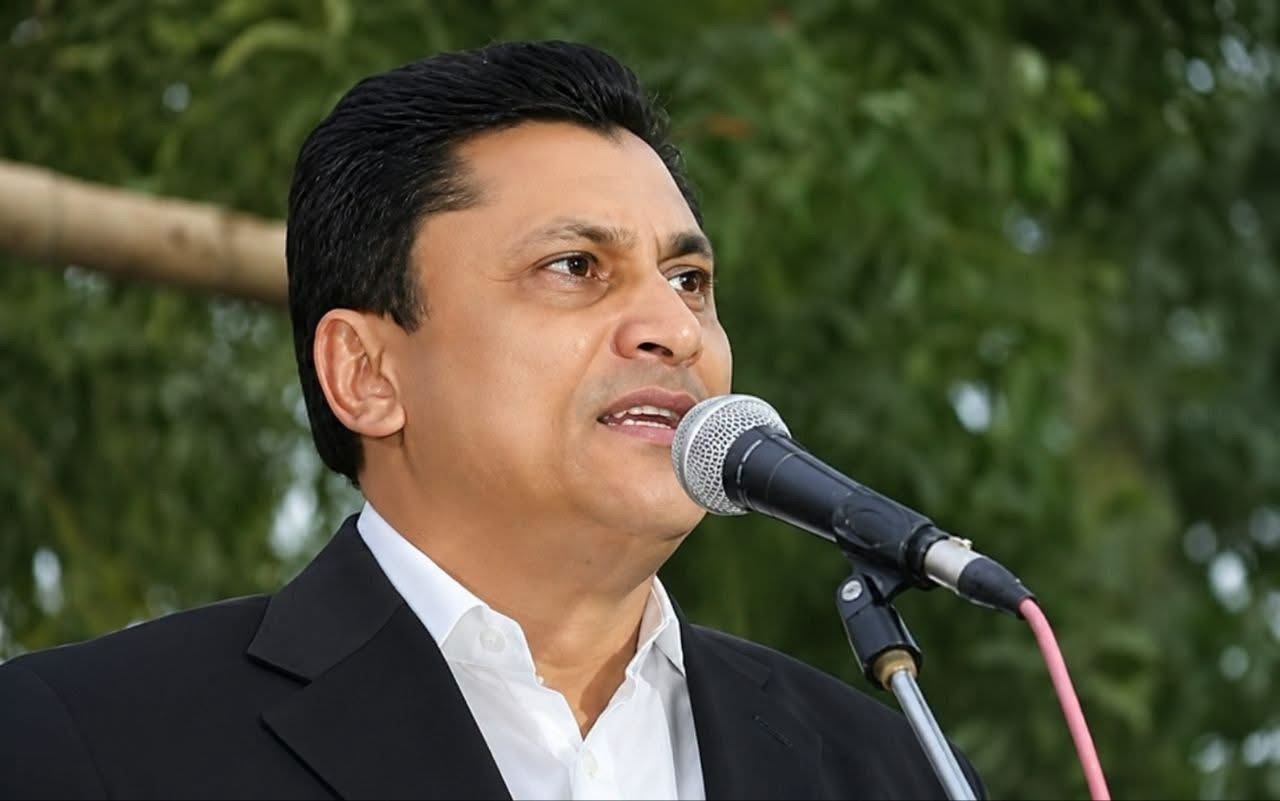
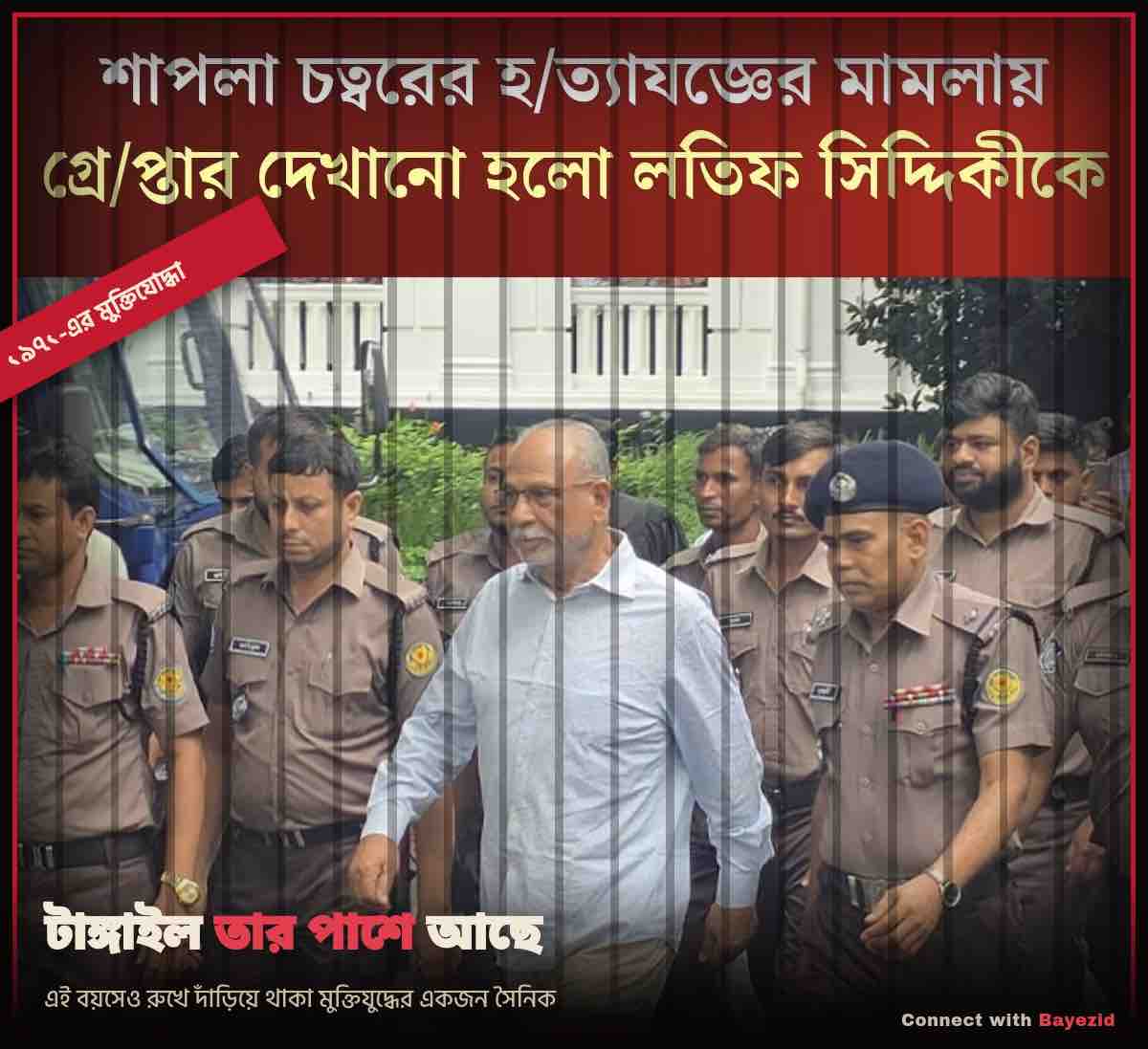
DHAKA — Abdul Latif Siddique, an 87-year-old freedom fighter, five-time member of parliament from Tangail-4, and former Textiles and Jute Minister, is once again behind bars. On Wednesday evening, the Detective Branch (DB) of Dhaka Metropolitan Police arrested him from his residence in Gulshan under a warrant issued by the International Crimes Tribunal (ICT), in connection with the 2013 Shapla Chattar killings. On Thursday, he was produced before the tribunal.
This is not his first brush with the law, and it will likely not be his last. Over the past twelve years, Latif Siddique has been sacked from the cabinet, expelled from the Awami League, jailed for religious-sentiment charges, prosecuted for corruption, detained after a scuffle at a public discussion, and now charged alongside former prime minister Sheikh Hasina in a genocide and crimes-against-humanity case. This is the complete, verified account of how he got here — from his decades in parliament to Thursday's tribunal hearing.
How Wednesday's Arrest Unfolded
The day began, ironically, with Latif Siddique trying to get ahead of the very warrant that would put him back in jail. On Wednesday morning, he appeared before Dhaka's Chief Metropolitan Magistrate Jewel Rana in an unrelated Anti-Terrorism Act case tied to Shahbagh Police Station. Speaking to reporters after that hearing, he said he had learned that morning that the International Crimes Tribunal had issued a warrant against him in the Shapla Chattar case, and that he intended to surrender voluntarily — either that day, or before the tribunal the following Sunday or Monday if police did not act first.
He also used the moment to deny any culpability. "I was a minister at the time," he told reporters, "but I knew nothing about the Shapla Chattar incident or the events of that period."
Police did not wait. At around 6:00 pm that evening, DB officers arrived at his Gulshan residence and took him into custody. DB Additional Commissioner Md Shafiqul Islam confirmed the arrest to media, stating plainly that a warrant existed against him in the ICT case and that he was detained accordingly. ICT Chief Prosecutor Md Aminul Islam confirmed that, as part of standard legal procedure, Siddique would be produced before the tribunal on Thursday morning. As of this report, the outcome of that hearing — whether he was remanded, sent directly to jail, or whether a bail application was heard — had not yet been confirmed by Bangladeshi media. This remains a developing story.
The Case: What Happened at Shapla Chattar in 2013
To understand why an 87-year-old former minister is being tried for genocide, it helps to go back to May 2013. Hefazat-e-Islam, an Islamist coalition, had gathered in the thousands at Motijheel's Shapla Chattar on May 5, pressing a 13-point charter of demands. What followed overnight — a security operation that dispersed the rally — has remained one of the most politically contested episodes in modern Bangladeshi history, its casualty figures and circumstances disputed for over a decade.
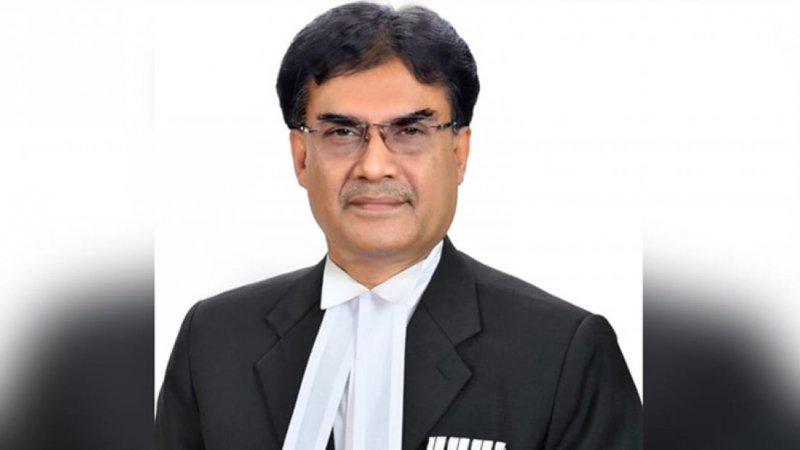
That changed on July 27, 2026, when International Crimes Tribunal-2 — a three-judge panel chaired by Justice Nazrul Islam Chowdhury, alongside judges Md Manjurul Bashid and Nur Mohammad Shahriar Kabir — formally accepted charges of genocide and crimes against humanity against 41 people over the crackdown. The accused include ousted prime minister Sheikh Hasina, two journalists, Latif Siddique, and 37 others. According to ICT Chief Prosecutor Md Aminul Islam, investigators have linked 58 deaths across Dhaka and four other districts to the operation. In the same order, the tribunal issued arrest warrants for 31 accused who remain at large — Latif Siddique among them — while directing that ten others, already jailed in separate cases, be produced before the tribunal for this case as well.
It is worth stating plainly what this case is and is not, at this stage: these are formally accepted charges, not a verdict. Latif Siddique has publicly and repeatedly denied any involvement.
Who Is Abdul Latif Siddique?
Latif Siddique is not a peripheral figure in Bangladeshi politics — he is, by most accounts, one of its most durable and most controversial characters. Born on December 18, 1937, in Kalihati, Tangail, he is a decorated Muktijoddha (freedom fighter) from the 1971 Liberation War and the eldest of the influential Siddique brothers of Tangail — a trio that has dominated the district's politics for half a century, alongside Bangabir Kader Siddique and Murad Siddique.
He won his Tangail-4 (Kalihati) seat five times as an Awami League candidate, first securing office in the 1970s and returning repeatedly through the decades. In 2009, under Sheikh Hasina's government, he was appointed to the cabinet, eventually holding the Textiles and Jute portfolio.
The 2014 Hajj Remarks That Changed Everything
None of what followed in 2025 and 2026 can be understood without the controversy that first derailed Siddique's career. On September 28, 2014, while in New York as part of the prime minister's delegation to the UN General Assembly, Siddique told an audience of expatriate Bangladeshis that he was "dead against" the Hajj, calling it a waste of manpower, and made further disparaging remarks about Tablighi Jamaat, the Prophet Muhammad, and the prime minister's son, Sajeeb Wazed Joy. Footage of the remarks spread rapidly and triggered nationwide outrage.
The fallout was swift and severe. He was sacked from the cabinet within days, then removed from the Awami League presidium, and shortly after stripped of his primary party membership altogether. Roughly 22 cases were eventually filed against him nationwide, with courts issuing arrest warrants in 17 of them. Rather than face the storm at home, Siddique remained in India for about a month and a half. He flew back into Dhaka's Hazrat Shahjalal International Airport on November 23, 2014, but was not arrested on arrival — he disappeared for nearly two days before surrendering himself at Dhanmondi Model Police Station on November 25. Notably, the police station did not even hold a warrant for his arrest at that point; he was produced before the Dhaka Chief Metropolitan Magistrate's court regardless, on a case alleging he had hurt religious sentiments, and was ordered to jail. He would not be released on bail until roughly seven months later. In September 2015, he formally resigned his parliamentary seat, telling the House in an emotional speech that he stood by his position.
Legal trouble continued to follow him. In 2017, the Anti-Corruption Commission filed a case accusing him of illegally selling over two acres of Bangladesh Jute Mill Corporation land in Bogura without a public tender. In June 2019, a Bogura court denied him bail and sent him to jail in that case; the Supreme Court stayed the trial proceedings the following year.
2025: Detained Again at a Liberation War Discussion
Latif Siddique largely stayed out of the political arena in the years that followed — until Bangladesh's political landscape was upended entirely. Following the student-led mass uprising of 2024 that toppled Sheikh Hasina's government, Siddique, running as an independent, had in fact won back his old Tangail-4 seat in the disputed January 2024 election, becoming a five-time MP. That tenure ended when the uprising forced the dissolution of parliament altogether.
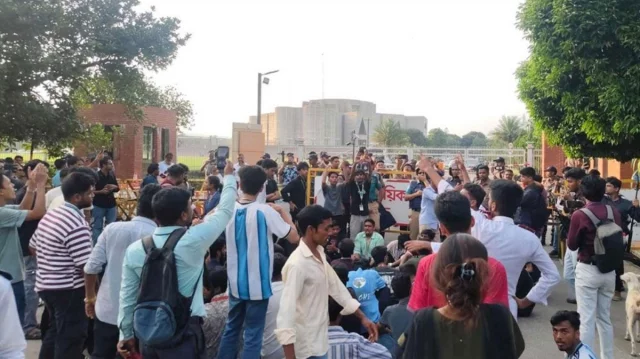
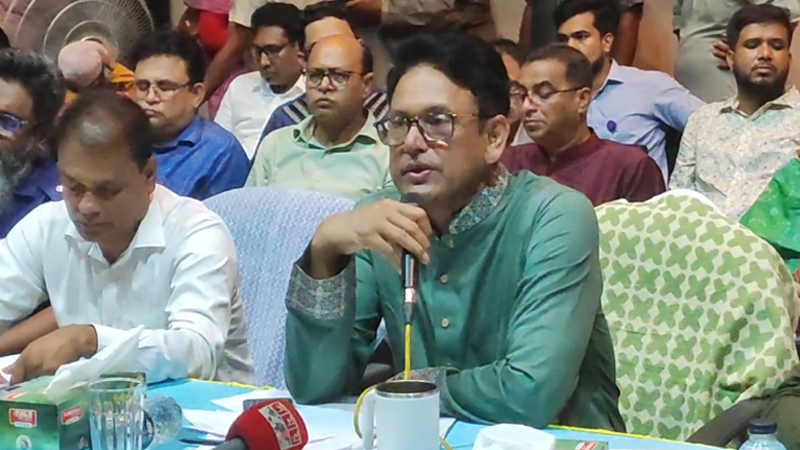
The next chapter began on August 28, 2025, when Siddique attended a roundtable discussion titled "Our Great Liberation War and the Constitution of Bangladesh," organised by a freedom fighters' platform called Mancha 71 at the Dhaka Reporters' Unity (DRU). Partway through the event, a group of roughly 20-25 people identifying themselves as "July Fighters" stormed the venue, surrounded attendees including Siddique and Dhaka University law professor Sheikh Hafizur Rahman Karzon, and accused them of being loyalists of the ousted Awami League. Police ultimately took 16 people into custody, including Siddique, Karzon, and journalist Manzurul Alam Panna.
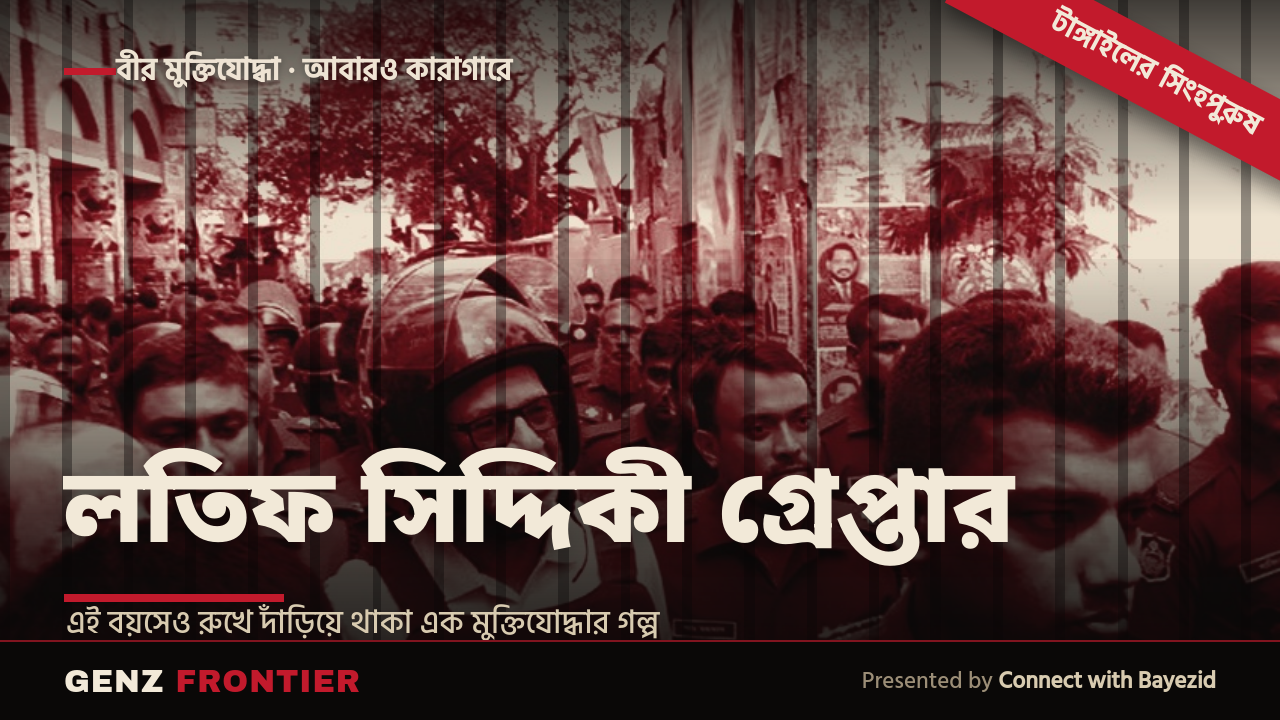
The following day, August 29, a case was filed under the Anti-Terrorism Act at Shahbagh Police Station, alleging a conspiracy to push the country toward armed struggle and to destabilise the interim government. Dhaka Metropolitan Magistrate Sarah Farzana Haque ordered all 16 sent to jail. Siddique, notably, initially refused to even sign the power of attorney needed to seek bail, telling his lawyer, "Why seek bail from a court that has no authority to grant it?"
A bail petition was eventually filed on his behalf. On September 3, it was withdrawn hours after filing when his family failed to produce required medical documents in time. Refiled the next day, it was rejected outright — Dhaka Metropolitan Magistrate Hasib Ullah Pias denied bail to both Siddique and journalist Panna on September 4, 2025, after defence lawyer Farzana Yeasmin Rakhi's arguments were opposed by the state. It would take over two more months before Siddique saw any legal relief: the High Court granted him bail on November 6, 2025, and when the state appealed, the Appellate Division of the Supreme Court upheld that bail on November 10, removing any remaining legal bar to his release.
2026: An Election Loss and a Court's Growing Impatience
Siddique's legal troubles did not translate into political retirement. He contested Tangail-4 again as an independent — running under the truck symbol — in the general election held in February 2026. This time, he lost to BNP candidate Lutfor Rahman Khan Matin, ending his parliamentary career for good, at least for now.
The Anti-Terrorism Act case, meanwhile, continued to grind on. At a hearing on May 13, 2026, the investigating officer once again failed to submit the case's investigation report. Standing in the dock, an evidently frustrated Siddique told the court he no longer wanted justice from a court where there was no fair trial to be had.
Two months later, the Shapla Chattar case would eclipse everything else.
Where Things Stand Right Now
As things stand, Latif Siddique is facing two active prosecutions simultaneously: the years-old Anti-Terrorism Act case stemming from the 2025 Mancha 71 incident, and the newly charged genocide and crimes-against-humanity case tied to the 2013 Shapla Chattar killings — a case that also names Bangladesh's former prime minister. He was produced before the International Crimes Tribunal on Thursday morning, July 30, as legally required following his arrest. What the tribunal decided at that hearing — remand, imprisonment pending trial, or a bail hearing — was not yet confirmed in available reporting at the time of writing. GenZ Frontier will update this report as soon as verified information becomes available.
The Bigger Picture
It is worth noting, in the interest of giving readers the full picture, that Siddique's arrest has not gone unchallenged in the court of public opinion. Following his 2025 detention, Awami League — whose activities remain banned in Bangladesh — issued a statement describing him as an "eminent freedom fighter" and accusing what it called "anti-liberation forces" of orchestrating mob action against him at the DRU event. Senior journalist Kamal Ahmed, chief of the Media Reform Commission, separately questioned publicly whether the manner of Siddique's 2025 arrest reflected practices reminiscent of the "old order." Neither of those reactions changes the fact that formal charges — genocide and crimes against humanity — have now been accepted by a tribunal in the Shapla Chattar case, and that this matter is still very much before the courts, not settled by them.
Given his age, his decades in Bangladeshi politics, and the scale of the case now attached to his name, Abdul Latif Siddique's arrest is likely to remain one of the defining political and legal stories of 2026.
Reporting sources: The Daily Star, Dhaka Tribune, Prothom Alo, The Business Standard, bdnews24, New Age, BSS, Bangladesh Sangbad Sangstha, and official Bangladesh Parliament records, cross-verified for this report.
Sayad Md Bayezid Hosan is a political correspondent for GenZ Frontier's Politics Desk.