
Arif Gadget Store’s Grand Opening Signals a More Serious Way to Buy Tech Online in Bangladesh
A Genz Frontier promotional feature on a new premium gadget marketplace, the developer who built its operating system, and the free digital tools that can help real buyers find it.
GenZ Frontier Business Desk | August 21, 2026
The opening story is bigger than a new storefront
A new online gadget shop can look ordinary from a distance: a catalogue, a few product photographs, a cart button, and a phone number for questions. Arif Gadget Store is presenting a different proposition. Its public site positions the business as a premium tech marketplace serving Bangladesh, while the accompanying developer case study describes the deeper operating system behind the storefront: product management, checkout, delivery, stock control, profit visibility, customer accounts, order tracking, and staff documentation.
That distinction matters. The grand opening is not only about putting products on a page. It is about turning the familiar Bangladesh gadget-buying journey—phone calls, Facebook messages, informal price checks, and notebook stock records—into a buyer-facing shop with a real operational layer behind it. The live homepage currently presents Arif Gadgets as a source for genuine phones, audio products, wearables, and accessories, with cash on delivery, a seven-day return window on eligible items, and nationwide courier delivery highlighted for shoppers.1
The result is a launch story with three connected parts. First, there is Arif Gadgets, the buyer-facing destination. Second, there is Sayad Md Bayezid Hosan, the developer whose public case-study index describes the project as “a real shop for Savar, built to run itself.”2 Third, there is a wider digital-support layer involving SmartGenTools, a free, browser-based utility platform, and a publicly linked automation product that points toward more organized customer conversations rather than more spam.
Editorial disclosure: This is a promotional feature prepared from the live public websites and a developer-supplied case-study archive. It does not claim an independently verified grand-opening date, sales total, traffic increase, revenue result, or customer-growth figure. Where a statement comes from a site or case study, it is identified as such.
Arif Gadget Store: a product-first vision for everyday tech buyers and resellers
Arif Gadget Store’s strongest public signal is product breadth with a practical buying path. The live homepage and navigation place smartphones, audio, wearables, power and charging, computing, smart home, cameras, accessories, button phones, mobile accessories, neckbands, and smart watches inside one searchable marketplace.1 That range gives the store a chance to serve more than one type of customer: a student looking for an affordable accessory, a creator upgrading a microphone, a household replacing a charger, and a small reseller comparing quantity pricing can all begin from the same destination.
The product vision is not simply “more gadgets.” It is reliable access to useful technology with the commercial information visible at the moment of choice. Arif Gadgets highlights genuine products, cash on delivery, a seven-day return window for eligible items, and a stated 48-hour shipping promise through nationwide courier delivery.1 In a category where buyers worry about authenticity, payment risk, delayed delivery, and unclear after-sales support, those signals help turn a product listing into a complete buying proposition.
| Product lane | What the public store highlights | Who it can serve |
|---|---|---|
| Smartphones and button phones | Everyday communication devices across different price points | First-time buyers, families, and customers who want a simple handset |
| Audio and creator gear | Wireless microphones, earbuds, neckbands, and related accessories | Creators, students, callers, musicians, and mobile-first media users |
| Wearables | Smart watches and related wearable products | Users seeking notifications, everyday convenience, or a giftable tech item |
| Power and accessories | Batteries, chargers, cases, and mobile accessories | Customers solving an immediate replacement or compatibility need |
| Retail and reseller purchasing | Quantity language, automatic tier-style pricing in the case study, and wholesale-account positioning | One-piece shoppers and small retailers buying at higher volumes |
The live homepage gives readers concrete examples of that range, including a Hollyland Lark M2 Wireless Microphone, the T900 Ultra 2 Smartwatch, the Discovery D7 Button Phone, VMAX batteries, a Winstar Discovery-9i, and a Recrsi Bluetooth neckband.1 Product prices, discounts, stock labels, and availability can change, so these examples should be read as a snapshot of the public storefront rather than a permanent catalogue promise.
The store’s larger opportunity is to make trust and convenience repeatable. A buyer should be able to search, inspect a product page, understand the payment route, place an order, track delivery, and ask for help without switching between several disconnected channels. For a reseller, the same system should make it easier to compare quantities, pricing tiers, and stock signals. That is the high-value vision visible in the store’s public structure: not a generic gadget page, but a Bangladesh-focused marketplace that tries to connect product discovery with fulfilment and support.
What shoppers see when they arrive
The first impression on arifgadget.store is deliberately commercial without feeling improvised. The header puts product search near the centre of the experience, with prompts for phones, audio, chargers, and SKUs. The navigation then divides the catalogue into familiar shopping missions: smartphones, audio, wearables, power and charging, computing, smart home, cameras, accessories, button phones, mobile accessories, neckbands, and smart watches.1
The homepage’s central message combines product breadth with transaction reassurance. Arif Gadgets publicly highlights genuine products, cash on delivery, a seven-day return window on eligible items, and a stated 48-hour shipping promise through a nationwide courier service.1 Those are not minor details for a first-time buyer. They are the information a visitor needs before deciding whether to browse further, contact the seller, or abandon the page.
The public site also exposes practical customer-service routes. The footer identifies Ariful Islam as the owner and provides a Savar, Dhaka location, two telephone numbers, a public email address, a Facebook page, WhatsApp contact, order tracking, and links to delivery, warranty, refund, return, privacy, payment, and pre-order policies.1 A buyer can therefore move from discovery to support without having to hunt for a contact channel inside a social-media comment thread.
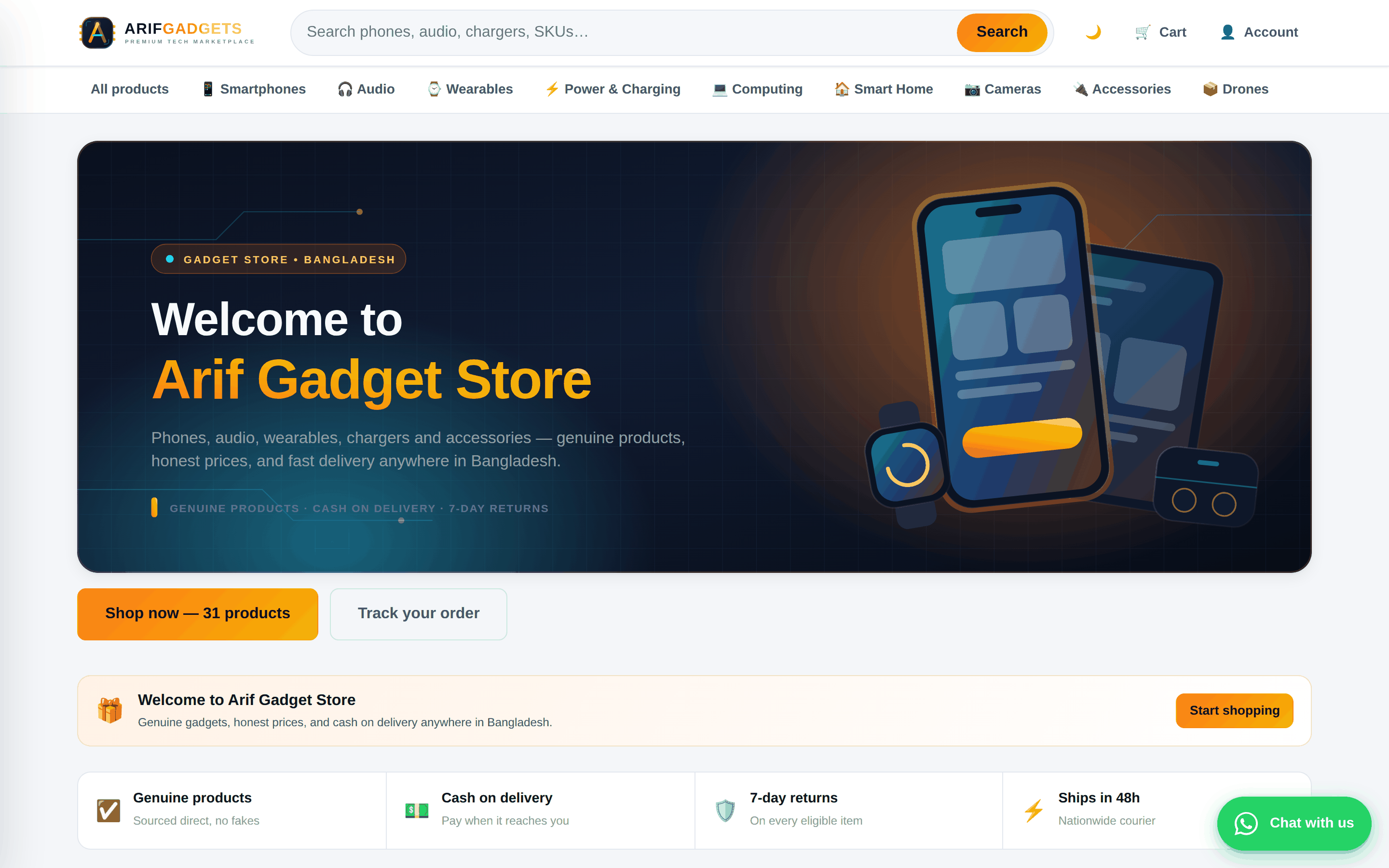
Image 1 — The welcome banner: the supplied case-study capture shows the brand’s dark navy and orange-gold language, a search-led header, clear category navigation, two primary actions, and a trust strip that surfaces genuine products, cash on delivery, returns, and delivery speed. The screenshot is a design reference supplied with the case study; live product counts can change.
A catalogue designed for both one-off buyers and small resellers
Arif Gadgets is not presenting only a premium-phone catalogue. The visible product mix reaches from lower-priced button phones, batteries, chargers, neckbands, and smart watches to microphones and smartphones. On the live homepage, examples include the VMAX V74 3000mAH Battery displayed at ৳1,300 after a stated discount from ৳1,500; the Discovery D7 Button Phone Dual Sim 1000mAh at ৳1,020 after a stated discount from ৳1,150; the Winstar Discovery-9i at ৳999; the T900 Ultra 2 Smartwatch at ৳650; and the Hollyland Lark M2 Wireless Microphone at ৳1,399.1
These displayed prices should be understood as live site examples, not a permanent price list. The homepage also labels items as clearance, best sellers, or just landed, and shows quantity language such as “from one piece.” The footer separately promotes bulk and reseller pricing and says wholesale accounts are welcome.1 That combination gives the shop a useful audience bridge: a student or creator may enter for one accessory, while a small retailer can investigate quantity-based purchasing without leaving the same marketplace.
This two-audience design is a strong part of the launch narrative. Many small merchants attempt to serve retail and wholesale customers through the same inbox, which makes price communication, stock confirmation, and order follow-up harder than it needs to be. The case-study archive says Arif Gadgets needed one shop where a buyer ordering a single charger and a retailer ordering by the carton could both feel properly served. The website’s visible category structure, product cards, quantity language, and reseller positioning are consistent with that brief.
There is also an important reporting distinction. The live homepage currently shows a “Shop now” call to action with a smaller visible product count, while the supplied case-study screenshots show a demonstration catalogue with a different count and demonstration inventory. Those are different snapshots of a changing commerce system. They should not be merged into one permanent inventory claim, and neither should be read as a promise that every pictured product is available on the day a reader opens the article.
The developer case study: where the real story sits
The official Arif Gadgets case study by Sayad Md Bayezid Hosan describes the project as a mobile-first commerce platform with a live catalogue, product galleries, cart and checkout, payments, courier booking, order tracking, customer accounts, printable invoices, analytics, margin arithmetic, a stock ledger, inventory alerts, customer operations, and Bangla documentation.2 The full case study expands that description into a detailed implementation narrative for readers who want to inspect the architecture and delivery decisions directly.
The interesting point is not simply that a stack was selected. It is that the stack was chosen around the shop’s constraints. The case study describes a React and TypeScript frontend, a Hono-based API running on Cloudflare Workers, Cloudflare D1 for relational data, R2 for product photographs, KV for selected caching needs, Pages for the web build, and GitHub Actions for the delivery pipeline. The archive also identifies integrations or payment instructions for Steadfast Courier, bKash, Nagad, Rocket, bank transfer, and cash on delivery.
In practical terms, that architecture aims to keep the storefront and the administrative system close to the same source of truth. The browser displays the shop, while the API and database remain responsible for pricing, order calculations, delivery state, stock movements, customer data, and operational permissions. The archive describes the system as a low-running-cost design at the shop’s volume, but that statement should be read as a project-specific implementation note, not a universal guarantee for every online retailer.
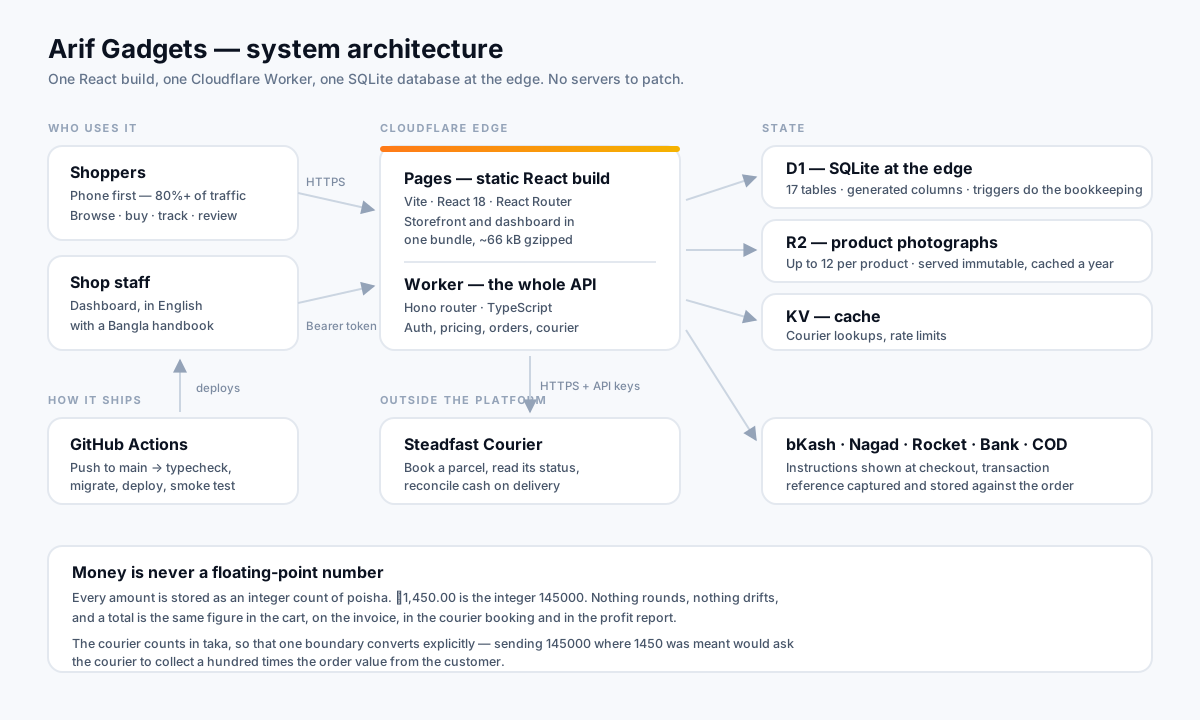
Image 2 — The architecture map: a clean, navy-and-orange system diagram explains how the storefront, staff dashboard, database, product photographs, courier integration, payment instructions, and deployment pipeline relate to one another. It also calls out integer-based poisha accounting and an explicit taka-conversion boundary for courier communication.
Why the product gallery is an operational feature, not decoration
Gadget commerce depends heavily on photographs. A charger, earbud case, watch, or phone can look interchangeable in a small thumbnail, and a cropped image can hide exactly the part a buyer needs to inspect. The supplied case study says the Arif Gadgets system supports up to twelve photographs per product, lets staff upload a set or paste existing image links, and allows the gallery order to be changed without re-uploading the files.
The archive also describes a product-image rule that is easy to overlook: product photographs are shown with a contain-style fit rather than being aggressively cropped to fill a frame. That decision preserves the full outline of a phone, plug, charger, or wearable. On catalogue cards, the system adds hover enlargement; on product pages, it offers a full-screen viewer with arrows, keyboard navigation, and swipe behaviour. For a store where product confidence depends on seeing the item clearly, this is not a cosmetic extra. It is part of the buying argument.
The same logic extends into the staff dashboard. Small product thumbnails can be enlarged without abandoning the table, which helps staff distinguish similar-looking items while editing stock, costs, or pricing. A strong product image workflow therefore serves both sides of the marketplace: shoppers get more information, and staff get fewer opportunities to attach the wrong image to the wrong SKU.
Checkout that respects the way Bangladesh buys
The live website prominently shows cash on delivery, while also displaying bKash, Nagad, Rocket, and cash-on-delivery payment methods in the footer.1 The supplied case study says the checkout flow is designed around that mix. Choosing a mobile-wallet or bank-transfer route reveals the shop’s receiving details and asks for a transaction reference; cash-on-delivery customers can proceed without entering a payment transaction ID.
The case study also describes two distinct identifiers for each order: an order number for tracking and an invoice number for receipt reference. Staff can search by either identifier, customer name, or phone number. This sounds like back-office detail, but it shapes the customer experience. A buyer who calls about an invoice should not have to explain the entire purchase history before the shop can locate it.
The project’s pricing logic is similarly operational. The case study says the browser sends product identifiers and quantities, while the server resolves the current price and any applicable quantity tier. That means the final calculation is not based on a price the browser is allowed to invent. It also says that monetary values are stored as integer poisha rather than floating-point numbers, so the cart, invoice, courier amount, and profit report can share the same arithmetic basis.
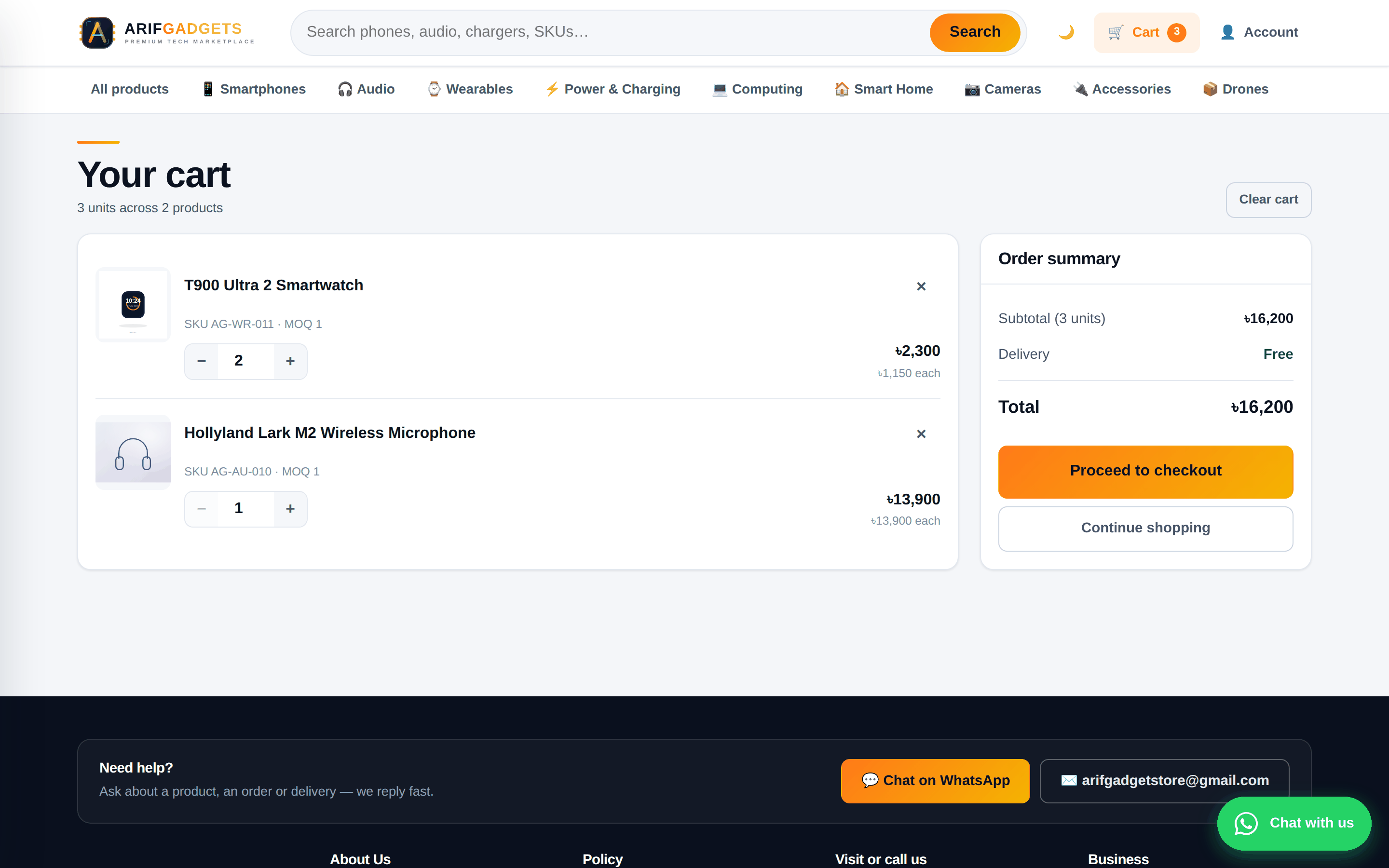
Image 3 — The volume-pricing cart: this supplied capture illustrates the distinction between a normal cart and an operational commerce cart. Quantity changes are reflected in the pricing tier, allowing a small reseller to see the commercial effect of ordering more than one unit. The values shown are demonstration data, not the client’s private trading figures.
The dashboard is where a shop becomes a business system
A storefront can attract attention, but a dashboard determines whether the shop can keep its promises after the order is placed. The supplied screenshots show a dark navy administrative sidebar with separate areas for dashboard analytics, live shop editing, products, orders, customers, inventory, offers and popups, content, settings, a Bangla guide, storefront access, and theme controls.
The product table puts cost, price, margin, stock, stock value, status, and editing actions into a single view. That arrangement is valuable because it gives the owner a commercial reading of the catalogue, not just a list of names. The case-study narrative says the editor recalculates margin, markup, and discount as staff type figures, so the effect of a pricing decision is visible before it is saved.
The archive is careful to say that the revenue, margin, stock, and order figures shown in the screenshots were generated through demonstration orders and a demonstration dataset. They are the system’s own calculations, but they are not Arif Gadgets’ private trading figures. That distinction is essential for honest promotion. The platform can be praised for making those calculations possible without pretending that a screenshot is a financial statement.
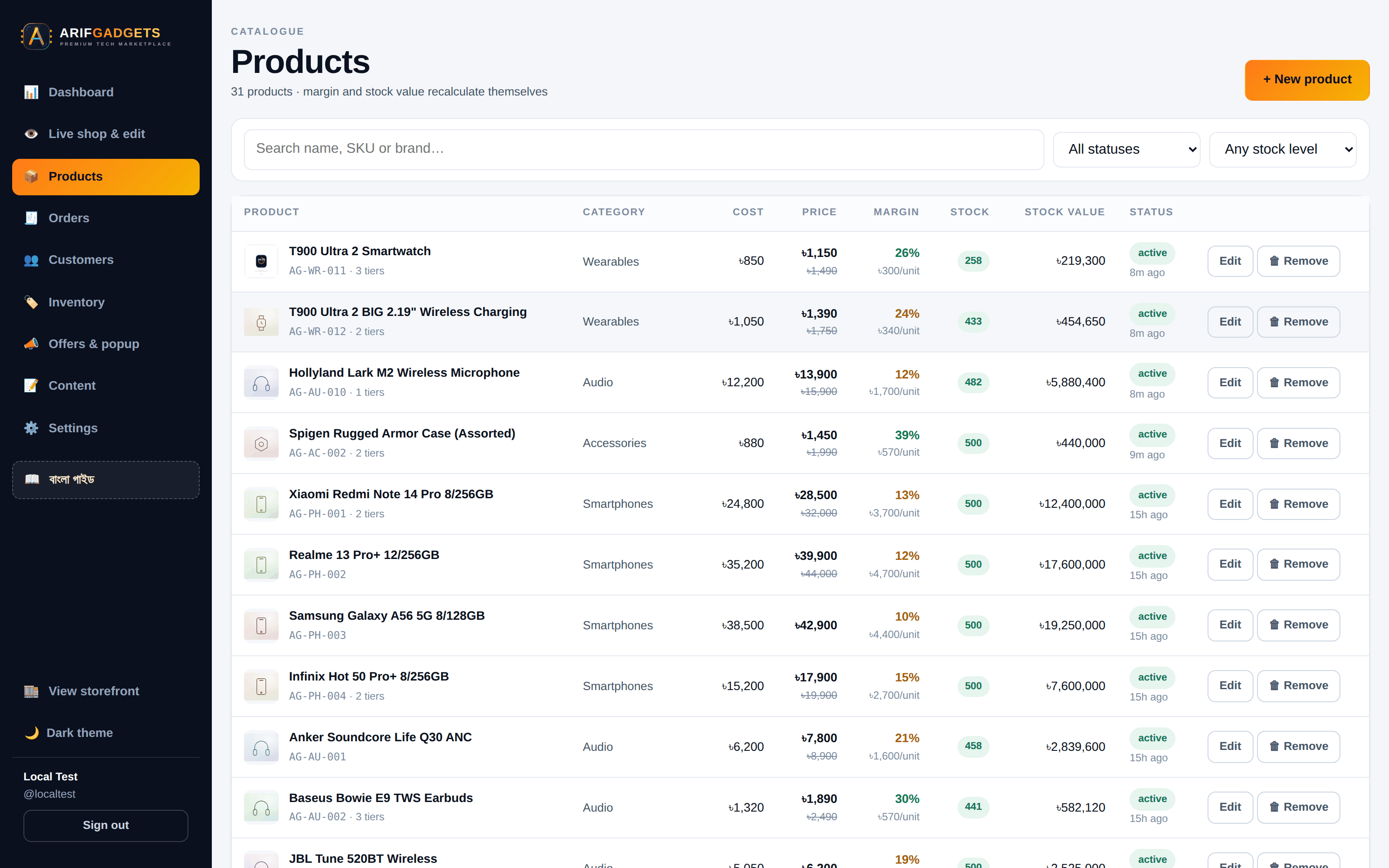
Image 4 — The product economics view: a staff-facing table turns the catalogue into a decision surface. The visual hierarchy makes margin and stock value easy to scan while preserving direct edit actions. Every quantity and price visible in this supplied capture is demonstration data.
Stock that can explain itself later
The strongest operational idea in the case study is the stock ledger. Instead of treating stock as one number that can be overwritten, the system records movements such as restocks, sales, returns, adjustments, and damage. The archive says each movement retains who made it, when it happened, why it happened, and what the balance became afterward.
That matters in a gadget shop because inventory problems are rarely just arithmetic problems. A missing unit may have been sold, returned, damaged, counted incorrectly, or moved during a manual adjustment. A ledger creates a trail that can be reviewed. The supplied case study says even a direct stock edit passes through the same ledger instead of erasing the history.
The inventory screen is described as ranking restocking priorities by capital tied up. That is a more useful question than simply asking which item has the lowest count. A product with two units left may be inexpensive, while another product with ten units left may represent much more money tied up in stock. The dashboard is therefore designed to help the owner decide where the next purchase should go.
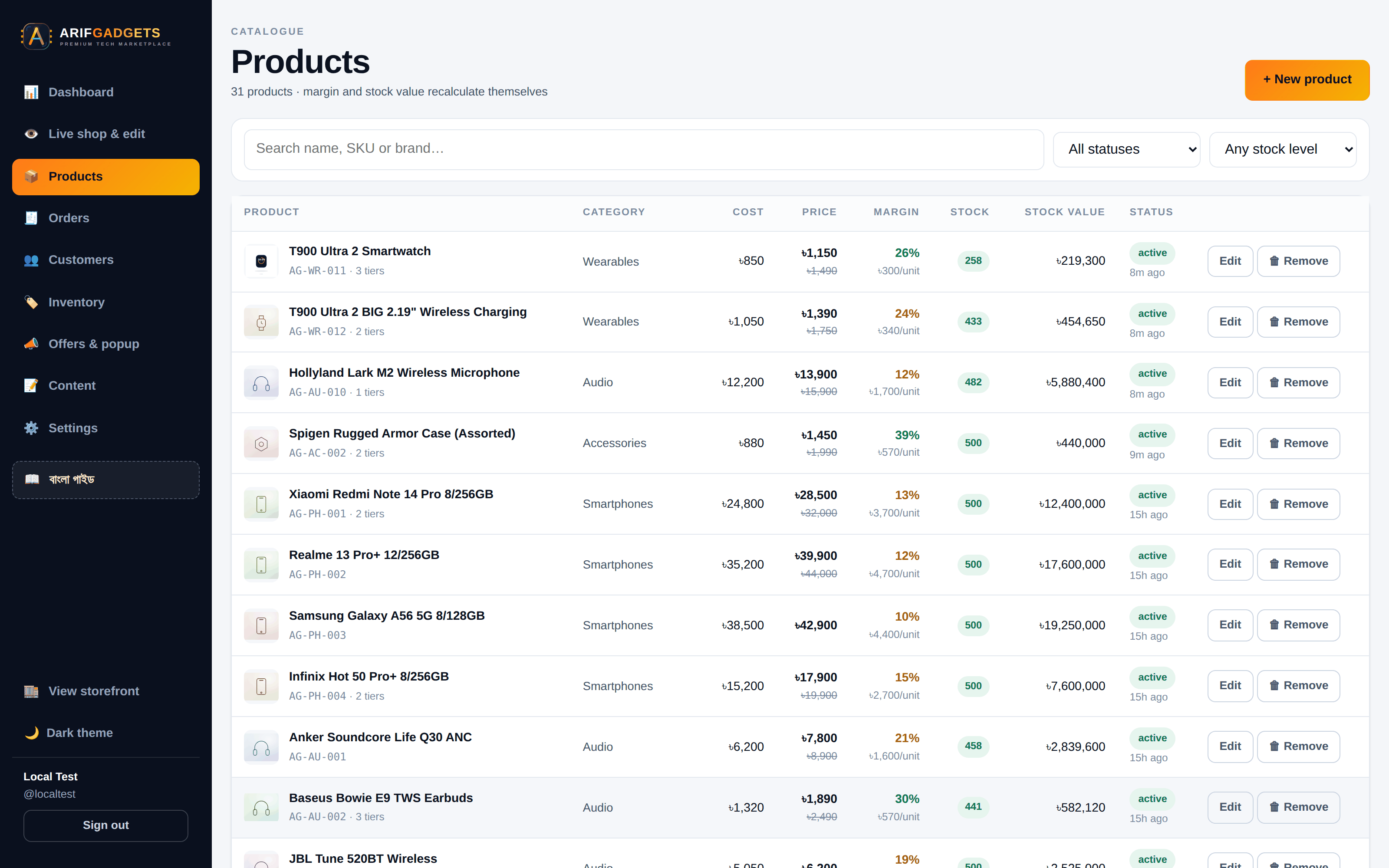
Image 5 — The stock ledger: this individual capture represents the audit trail behind the product count. Its purpose is accountability—showing the reason and resulting balance for a movement—rather than merely displaying a green or red stock badge.
Courier control with a human decision at the centre
The case study describes a narrow Steadfast Courier integration. The important design choice is that parcel booking is not automatic. Staff press a send action, see the amount the courier will be asked to collect, and confirm. That human confirmation is a sensible boundary when a click can create a real delivery obligation or a cash-on-delivery collection request.
The archive says courier status is treated as an external authority: delivered means delivered, returned can restock units and reverse revenue, while ambiguous or partially delivered outcomes do not move the accounts automatically. That avoids a common operational error—recognising revenue or rewriting inventory before a delivery outcome is final.
The case study also calls out the taka-versus-poisha conversion boundary. Arif Gadgets’ system counts money internally in poisha, while the courier expects taka. The conversion is kept explicit so a unit error cannot silently multiply a collection amount. The dashboard is also described as distinguishing missing keys, rejected keys, courier errors, and unreachable services instead of showing one vague “failed” message.
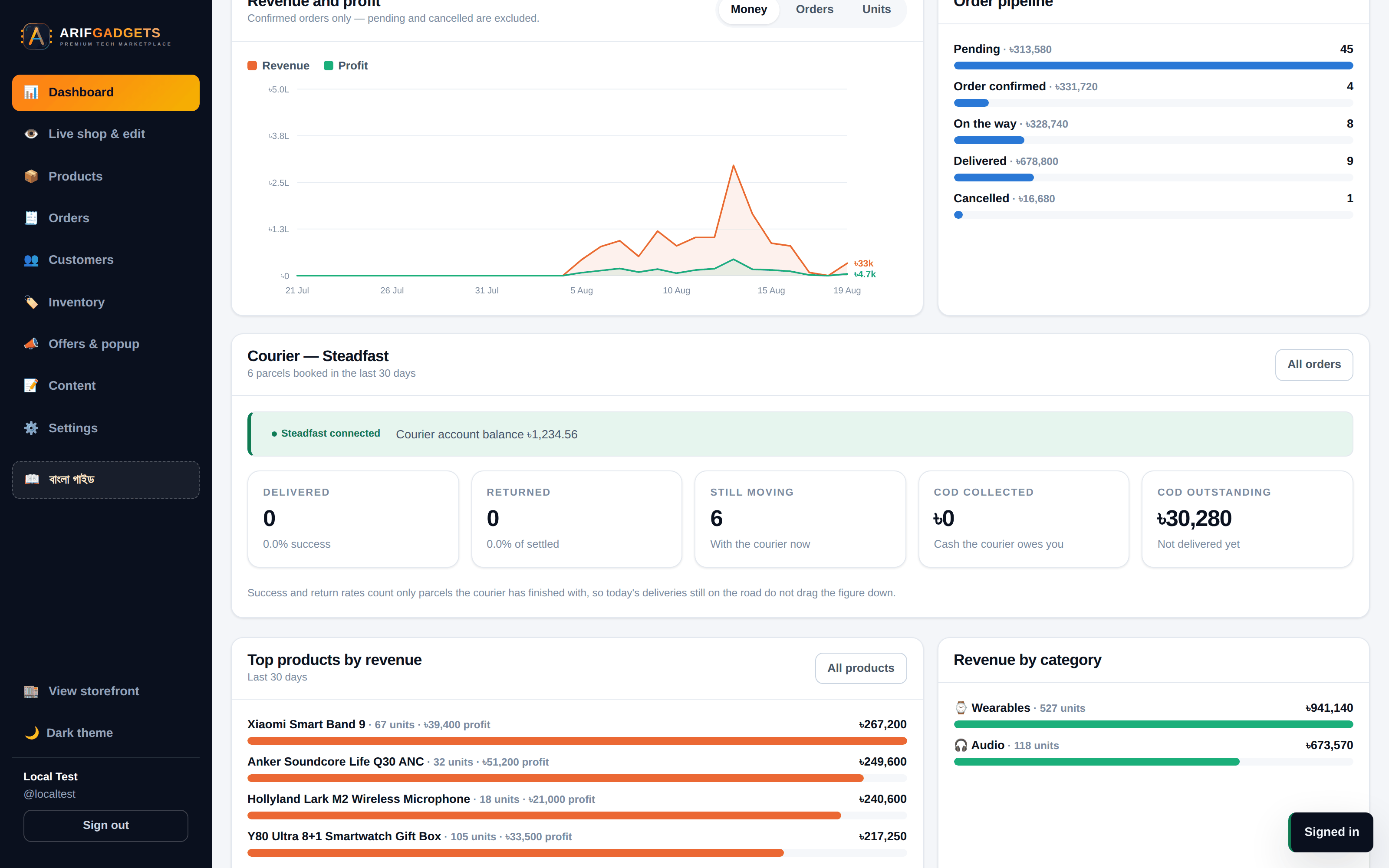
Image 6 — The courier panel: the design keeps dispatch under staff control, makes the collection amount visible before confirmation, and treats returned or unresolved delivery states differently from completed deliveries.
Designed for the phone first, documented in Bangla
The case-study archive says the application was designed from a 390-pixel phone width before expanding to larger screens. The mobile experience includes bottom navigation, a slide-out category drawer, catalogue and product screens that preserve the buying path, and a full-screen image viewer that responds to swipe.
That phone-first approach is more than a responsive layout checkbox. If a large share of potential shoppers arrive through mobile data, the page must make its main actions obvious, avoid unnecessary weight, and let buyers move between product information, cart, checkout, and order tracking without fighting the interface. The live site’s search, category navigation, cart, account, and order-tracking routes reinforce that orientation.1
The staff side receives a parallel accessibility decision. The archive says the dashboard includes a Bangla handbook that explains the meaning of order states, product photography guidance, courier statuses, and common connection problems. Documentation in the language used by the people operating the shop is a practical form of product design. It reduces hand-offs to the developer and helps the business remain usable after launch.
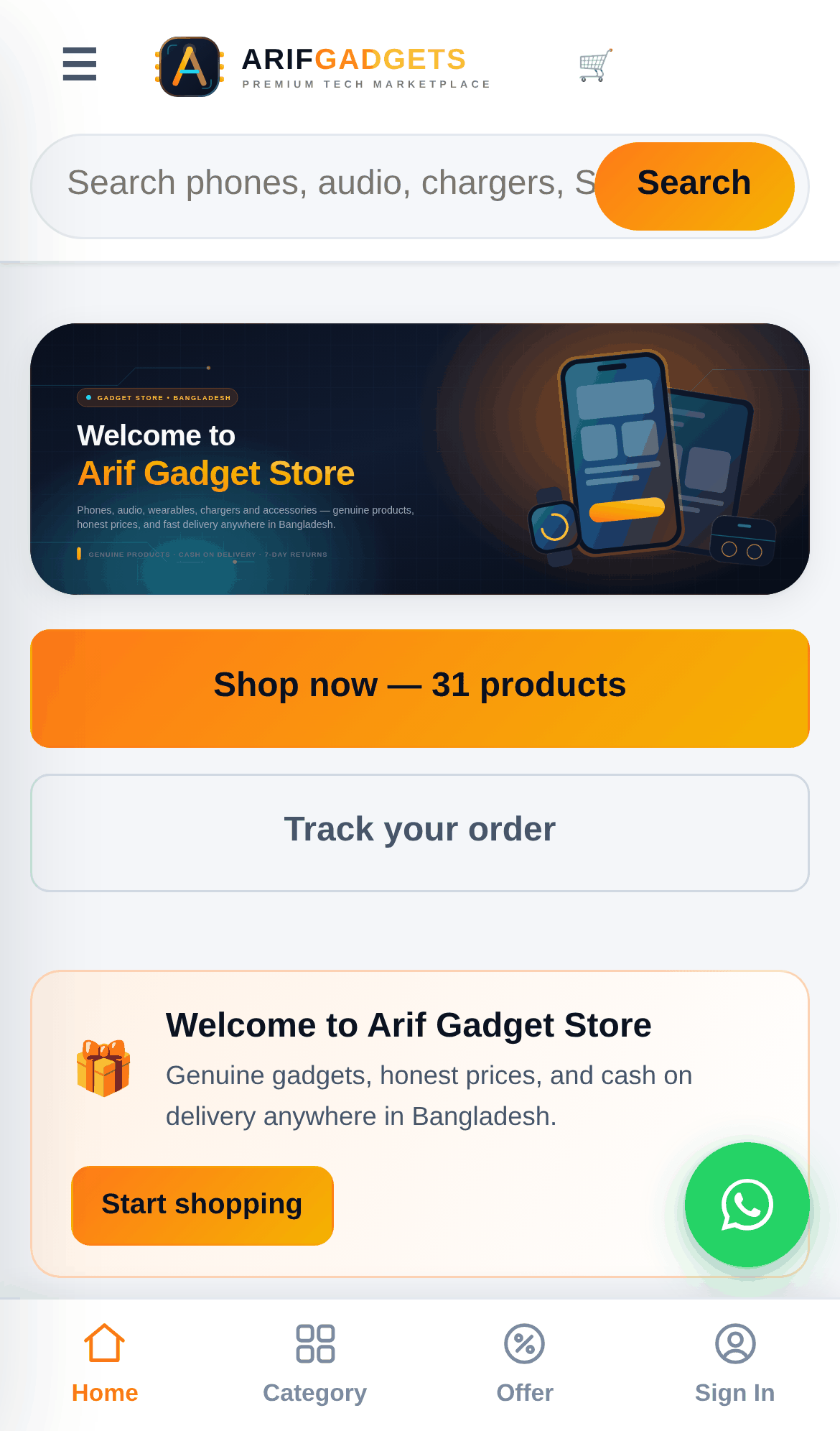
Image 7 — The mobile storefront: the individual phone capture focuses on the first-screen journey, where a shopper needs to understand the shop, search or browse, and reach the cart or tracking path without navigating a desktop-style layout.
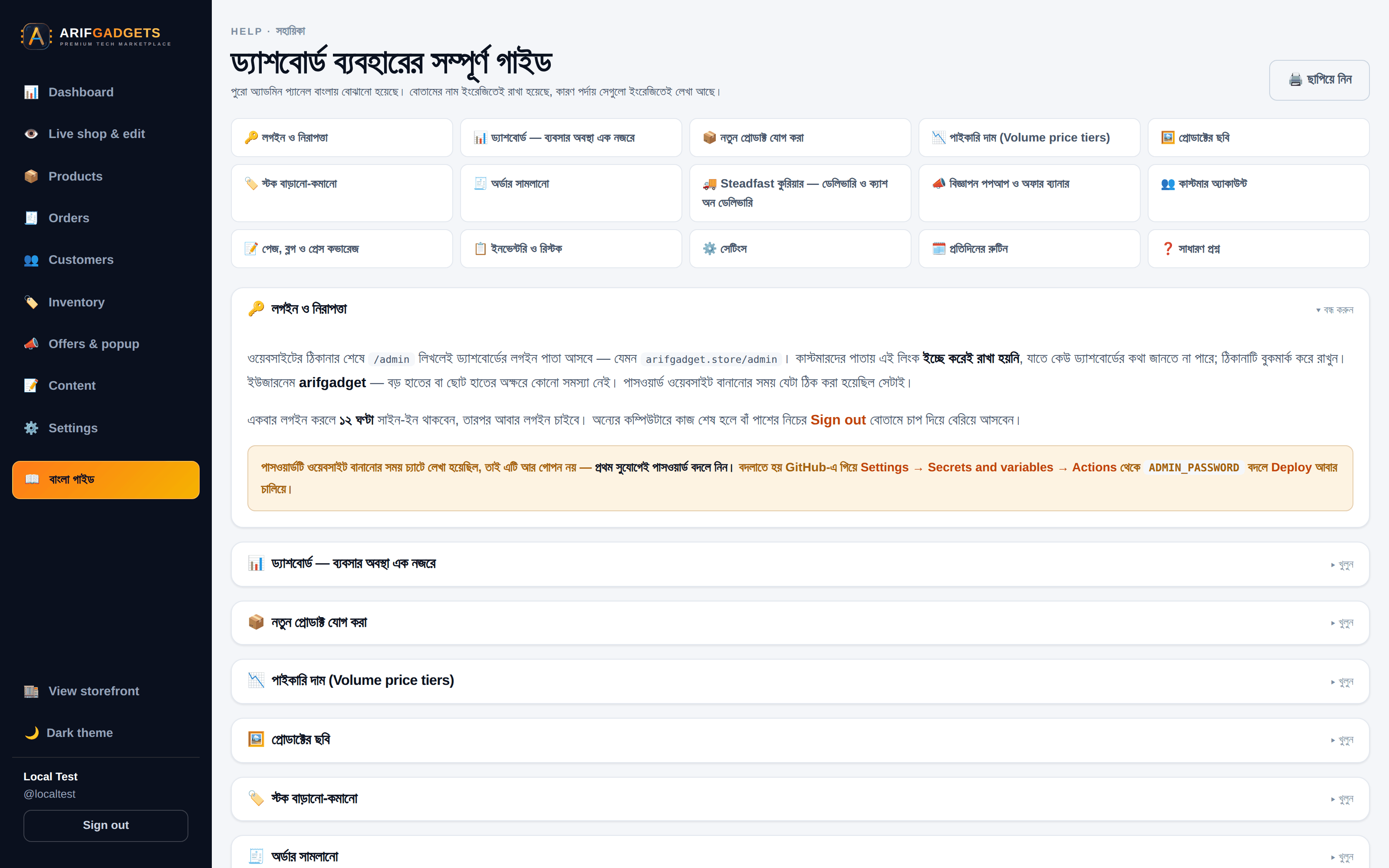
Image 8 — The Bangla guide: this capture shows documentation treated as part of the product, not an afterthought. The guide is intended to explain the operational meaning of the dashboard, including product handling and order workflows.
The testing story is more useful than a perfect launch claim
The supplied case study says the system was tested by driving a real browser against the running application with Playwright. The value of that method is visible in the bugs it reportedly caught: a delivery threshold that could make every order free, a phantom stock adjustment created by trigger ordering, a deployment guard that tested reads instead of writes, a missing WhatsApp line on invoices, and a live preview that could not find products by slug.
These examples make a stronger promotional point than saying a system was “fully tested” without context. Commerce bugs often appear at the boundary between what the code seems to do and what a person actually experiences. A browser-driven test can place an order, watch the delivery charge, read back the ledger, inspect an invoice, and follow the route a staff member would use.
The lesson for buyers is indirect but important: a shop becomes more trustworthy when the business behind it has considered not only how a page looks, but also how money, stock, delivery, identity, and customer support behave together. That is the kind of invisible work that a grand-opening story can bring into view.
Where SmartGenTools fits—and where it should not be oversold
The Arif Gadgets footer credits SmartGen as the development partner and links to SmartGenTools. SmartGenTools’ live homepage describes a privacy-first digital utility platform, while its public tools page presents free browser-based tools, no sign-up, and client-side processing for many utilities.3 The platform lists SEO and marketing utilities, developer tools, content and design helpers, and everyday calculators.
The practical value for a new store is not that a free tool can magically create demand. It is that a small business can use a set of lightweight utilities to create cleaner, more measurable digital touchpoints. The platform lists a UTM Builder for campaign links, a WhatsApp Link tool for direct conversations, a Mailto Generator, a QR Code Generator, an SEO Audit Tool, Meta Tag and Schema Generators, a Sitemap Finder and Downloader, an image compressor, and a picture URL generator.3
Used carefully, those tools can support a real buyer journey. A QR code can direct a customer from a printed counter card to a specific Arif Gadgets category. A UTM link can distinguish a Facebook post from a creator collaboration or a WhatsApp broadcast. Image compression can reduce the friction of product pages on mobile networks. A sitemap utility can help a site owner inspect whether important product and policy URLs are discoverable. None of that is a substitute for inventory accuracy, service, pricing, or a legitimate reason for a buyer to return.
The site also describes an open-source engine and local processing for many utilities.3 The safe editorial interpretation is use the specific tool’s own privacy and processing explanation rather than making a blanket promise about every feature. SmartGenTools’ FAQ says no account is required and that most tools process data locally in the browser; “most” is the important word.
Automation without pretending that a chatbot is a sales team
SmartGenTools publicly links an Automation Chatbots product, which opens SmartFlow AI. Its public page describes bring-your-own-AI-key automation across WhatsApp, Messenger, Telegram, and email, with encrypted key storage, provider failover, confirmed-order extraction, and Excel export.4
That makes SmartFlow relevant to the Arif Gadgets story as a possible service ecosystem, not as proof that Arif Gadgets currently uses the product. The live public pages reviewed for this feature do not establish that the store has deployed SmartFlow, and this article does not claim that it has. A responsible future use case would be narrow: answer repetitive product questions, surface a current product page, collect a confirmed order request, or hand a complex conversation to a human. It should not invent stock, promise a delivery date that the shop has not confirmed, or replace customer support with a scripted wall.
The SmartFlow page also explicitly warns that several testimonial cards are placeholders and should not be used in advertising as real customer quotes.4 That honesty is worth noting because it creates a useful standard for the wider promotion: a launch story can be persuasive without borrowing testimonials, fabricating buyer volume, or presenting a demonstration dataset as private business performance.
The traffic-drive plan: real buyers, useful services, measurable pathways
The phrase “traffic drive” is often used as if traffic itself were the result. For Arif Gadgets, the stronger approach is to build pathways that connect the right buyer to the right product and service page. The store already has several foundations: searchable products, category routes, product pages, order tracking, visible payment methods, policy pages, WhatsApp and email contact, and a public location.1
The first pathway is search intent. A customer looking for a budget button phone, wireless microphone, smartwatch, neckband, charger, or mobile accessory should be able to land on a relevant category or product page rather than a generic social profile. Internal links from helpful content to the relevant category, product, delivery policy, and order-tracking pages can make that journey more direct. Search visibility cannot be promised, but the information architecture gives the site something concrete to be discovered for.
The second pathway is trust at the moment of choice. Genuine-product messaging, cash on delivery, the seven-day return language for eligible items, the stated shipping window, policy links, payment options, and support contacts are not decorative badges. They are the answer to the questions a first-time buyer is already asking. The traffic strategy should therefore send visitors to pages that answer those questions, not simply push them to the homepage and hope.
The third pathway is measurement without manipulation. SmartGenTools’ UTM Builder can help label links from a creator post, a Facebook campaign, a QR card, a WhatsApp campaign, or a partner feature.3 The goal is not to inflate clicks. The goal is to tell the owner which legitimate source sends people who view products, begin checkout, contact support, or complete an order. Any reporting should separate page visits, product views, conversations, carts, and completed purchases; otherwise a large number can hide a weak buyer journey.
The fourth pathway is service-led content. A post explaining how to choose a wireless microphone, what to check before buying a smartwatch, how to track an order, or how cash on delivery works can create a useful reason for a visitor to arrive. That content should link to the relevant Arif Gadgets products and policies in context. It should not be spun into dozens of near-identical pages, packed with keywords, or written to imitate a customer who never existed.
The fifth pathway is repeatability for the owner. Sayad Bayezid’s public portfolio describes a founder-led practice spanning web platforms, SEO systems, marketing infrastructure, and product builds.5 The Arif Gadgets case study shows how that kind of work can be joined to the daily business: the owner can edit offers and content, staff can work from the dashboard, stock movements can be reviewed, and the customer can track an order without creating an account. Traffic is more valuable when the business can fulfil what the traffic asks for.
A love note to Arif Gadgets
Arif Gadgets, this is the part of the launch worth celebrating: your store is being introduced not as a page that merely displays gadgets, but as a place that tries to respect the full buyer journey. Someone can discover a product, compare a price, ask for help, choose a payment method, wait for delivery, track the order, and return to the shop later. A small retailer can look for quantity pricing. A staff member can look up a customer, see the delivery details, check stock history, and understand the next action.
The most valuable promise is not that every order will be perfect or that every product will remain in stock. No honest retailer can promise that. The more durable promise is that the shop has been designed to make the important questions visible: What is this product? Is it available? What will I pay? How will it reach me? What happens if I need help? Can the staff explain what happened later?
That is a meaningful foundation for a grand opening in Bangladesh’s fast-moving gadget market. May the store earn attention through useful products, clear policies, responsive service, and buyer trust that accumulates one real order at a time.
What readers should do next
For shoppers, the next step is straightforward: visit Arif Gadget Store, browse the category that matches the need, inspect the product information, and use the listed WhatsApp, email, phone, or order-tracking route when a question needs a human answer. Buyers should review the relevant return, delivery, warranty, and payment terms before ordering, especially for an item where compatibility or condition matters.
For developers, the public work is documented at Sayad Bayezid’s case-study index. For creators, marketers, and small businesses, SmartGenTools’ free tools directory offers a practical place to test UTM links, QR codes, image compression, SEO utilities, and developer helpers without beginning with a large software budget. For teams exploring channel automation, SmartFlow AI should be evaluated as a separate product and configured only with clear ownership, privacy, and human-escalation rules.
Publication checklist for Genz Frontier
| Task | Status | Editorial note |
|---|---|---|
| Use the premium WebP cover | Ready | The image is an editorial promotional visual, not a shop photograph. |
| Link the main subject | Ready | Link the first and final Arif Gadgets mentions to https://arifgadget.store/. |
| Add the developer backlink | Ready | Use the contextual Sayad Bayezid link where the case study and service ecosystem are discussed. |
| Add SmartGenTools promotion | Ready | Frame it as a free utility platform and practical measurement aid, not a guaranteed traffic machine. |
| Mention automation carefully | Ready | Attribute the SmartFlow capabilities to its public page; do not claim Arif Gadgets currently uses it. |
| Preserve the demo-data disclosure | Required | Never publish supplied screenshot figures as Arif Gadgets’ private revenue, stock, or customer results. |
| Verify live prices before publishing | Required | Product prices and stock can change after this feature is written. |
| Confirm grand-opening date or event details | Required | No date or physical launch event was supplied or independently verified in this assignment. |
| Add image captions and alt text | Ready | Each supporting image is described individually below its placement. |
References
Production asset notes
The supporting screenshots in this feature are selected individual files from the supplied archive rather than a single contact sheet. The archive contains additional storefront, mobile, dashboard, policy, content, and full-page captures. The selected set is intentionally limited so each image can be read as its own piece of evidence: welcome design, volume pricing, product economics, stock history, courier control, mobile layout, Bangla documentation, and system architecture.